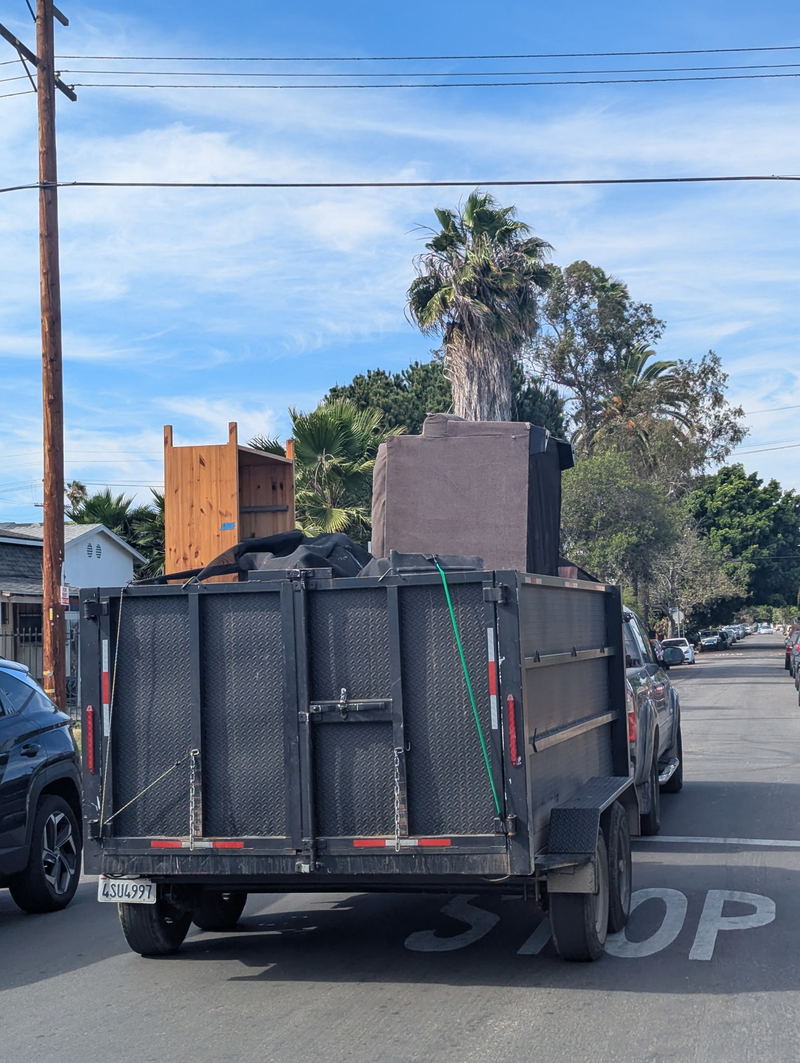
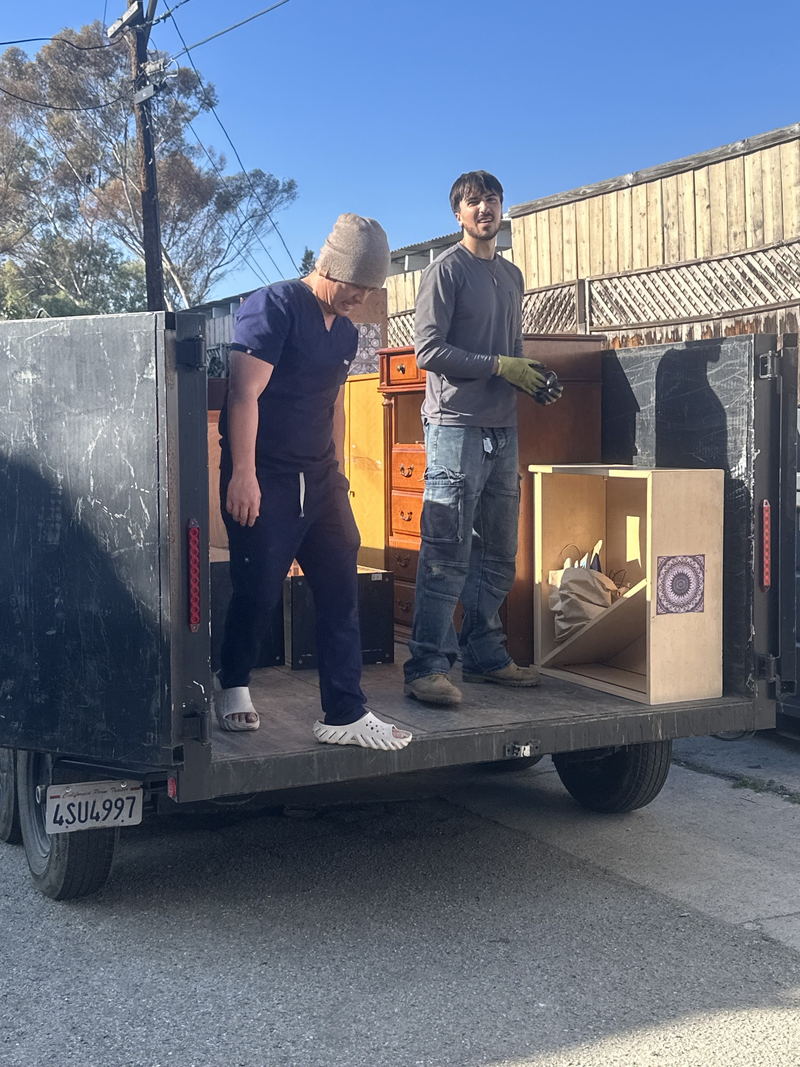
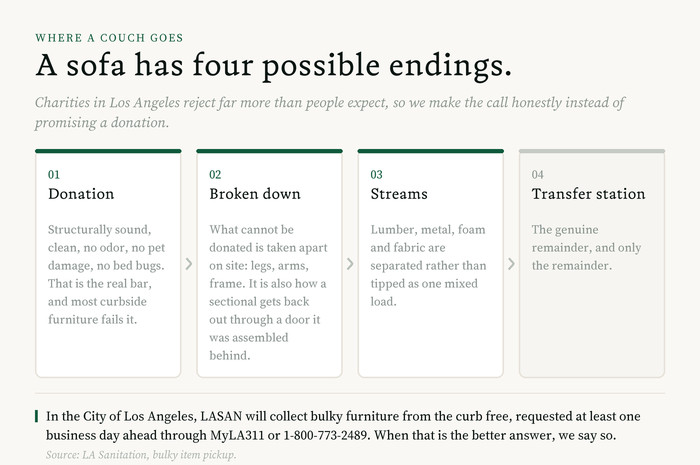
Reuse is judged on condition and nothing else. A sound frame, clean upholstery and no odor means a piece can be offered for donation. A snapped rail, water staining, smoke or pet odor, or any sign of an infestation means it cannot, because a rejected donation is just the same sofa making a second journey. We make that call in front of you while quoting rather than deciding quietly at the tailgate, and where a piece has real resale value we will say so instead of loading it.
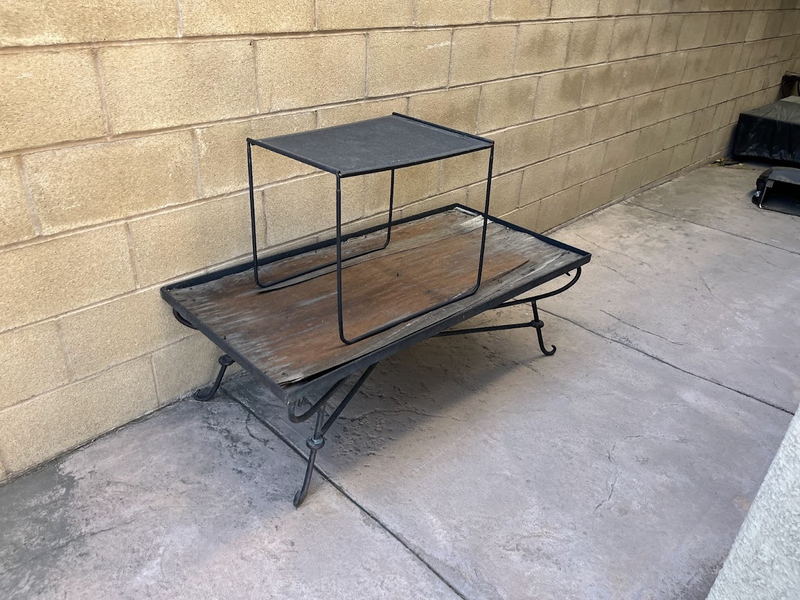
The second stream is materials. Steel-framed furniture, metal bed frames, filing cabinets and the mechanisms inside recliners and sofa beds are recoverable metal once separated. Solid timber has its own routes. What defeats reuse and material recovery alike is the modern composite piece: a flat-pack unit that has already been assembled once, moved twice and stored damp usually has no second life at all, and pretending otherwise on a quote is not honesty, it is marketing.
The third stream has a statewide funding mechanism behind it, and Torrance residents have already paid into it. California's Mattress Stewardship Program is overseen by CalRecycle and run by the Mattress Recycling Council, the nonprofit stewardship organization created by mattress manufacturers, renovators and retailers, and it is funded by a recycling fee collected when a new mattress is sold. The fee changed to $18.00 on April 1, 2026. What that fee buys is genuine coverage: more than 240 permanent drop-off locations statewide plus around 100 collection events a year, with 99 percent of Californians living within 15 miles of a collection site or event, and 14.2 million mattresses collected in the state since 2016. It is also why the City of Torrance can accept mattresses on its free pickup and have them recycled rather than landfilled, and why nobody in this city should be paying a landfill by the ton for a box spring.
The fourth answer is the honest one. Some furniture is finished, and a proportion of every load is genuinely disposed of. What we can control is the size of that proportion, which is decided by sorting before loading rather than after. Two things never travel with furniture, whatever else is going: anything electrical with a screen or a board in it, because California treats non-functioning cathode ray tubes and mercury bulbs from televisions, laptops, tablets and monitors as hazardous waste, and anything liquid or chemical that has been living behind the wardrobe, because paint, solvents, aerosols, batteries and lamps are banned from the trash statewide. Both come off the load at your address and go where they are supposed to. A powered recliner is a good example of all of this in one object: a timber frame, a steel mechanism, a fabric shell and a transformer, and four different destinations once it comes apart.