Working with Hunter and this company was great. Gave us a quick quote over the phone after sending photos and was able to help us the SAME day. Removal was fast and easy. We definitely recommend going with this company.
Refrigerators, freezers, washers, dryers, dishwashers, ovens, wall and window air conditioners, dehumidifiers and water heaters disconnected, carried out and routed for metal recovery anywhere in Torrance.
Free quote, no obligation · one flat number before we start · you can also text that number

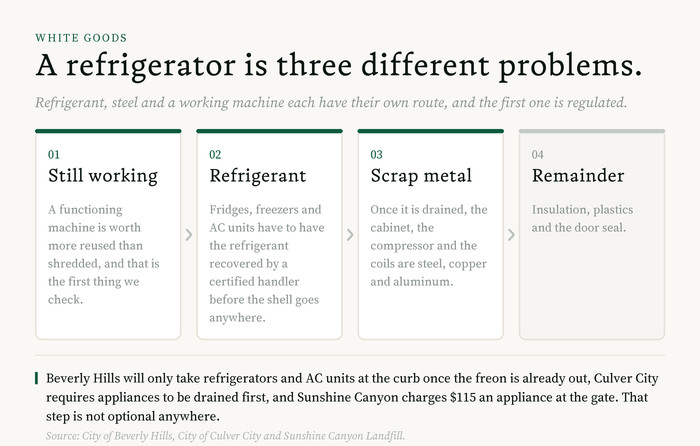
California law calls a refrigerator, washer, air conditioner or water heater a major appliance, and refrigerants, mercury switches, used oil and capacitors must come out before the metal is baled or shredded. Torrance's once-a-year free pickup excludes water heaters and electronic waste. That is why appliances need a separate route.
Appliances behave differently from everything else on a Torrance job because California defines them separately. Public Resources Code section 42166 says a major appliance means any domestic or commercial device including, but not limited to, a washing machine, clothes dryer, hot water heater, dehumidifier, conventional oven, microwave oven, stove, refrigerator, freezer, air-conditioner, trash compactor and residential furnace. Section 42167 then lists the materials that require special handling inside them: refrigerants injected into air-conditioning and refrigeration units, encapsulated PCBs and metal-encased capacitors, used oil, mercury in switches and temperature control devices, and anything else that becomes a hazardous waste when it comes out. Section 42175 requires those materials to be removed before the appliance is crushed for transport or transferred to a baler or shredder, and section 42175.1 makes failure to comply a violation of California's hazardous waste control law. Meanwhile the City of Torrance's own free large item pickup puts water heaters on its prohibited list as plumbing fixtures under construction debris, and electronic waste on it as household hazardous waste. Los Angeles Junk Removal & Hauling disconnects the unit where it stands, carries it out, and sends it down a metal recovery route rather than to a landfill gate, quoted free before anything is touched.
Most people think of an appliance as a heavy object. The state of California thinks of it as a sealed container with five categories of regulated material inside it, and that difference is the entire reason an old refrigerator cannot simply be tipped with the sofa. The shell is worth recovering as steel, but nothing can be baled or shredded until the circuit has been dealt with, and that sequencing is written into statute rather than left to a hauler's conscience.
This page is about how that plays out at a Torrance address specifically: which appliances the City's own free pickup will and will not take, what has to happen before the metal moves, and how a unit gets out of a 1950s tract kitchen without taking the door frame with it. Everything we haul in this city is on junk removal in Torrance, and the county-wide version of this service is on appliance removal.
Torrance residents with City trash collection get one free on-call large item pickup per address per calendar year, up to 20 items, booked by telephone on 855-354-5623 and scheduled on their own refuse collection day. Where appliances are concerned, that program has an unusually jagged edge, and it is worth reading before you plan around it.
Two appliance-shaped things are prohibited outright. Water heaters are named on the construction debris list, as plumbing fixtures, so the tank in the garage corner is excluded no matter how many of your 20 items are unused. Electronic waste is named on the household hazardous waste list, alongside paint, sharps, fluorescent tubes and mercury-containing equipment, so a television, a monitor or a microwave with a circuit board in it is not a candidate either. A third exclusion catches the heaviest units: items that cannot be safely handled by two persons are prohibited, and the City gives spas and hot tubs as its examples.
Refrigerators, washers, dryers and ranges are not named on any of those four prohibited lists, and the City's page makes one further remark that bears on them. It states that large item collections, with the exception of electronics and metal appliances, are sent to the landfill and not recycled — language which treats metal appliances as the fraction that does get recovered. Separately, under alternative disposal options, the City points residents to SA Recycling in Gardena for metal and appliance recycling, including large domestic appliances, small electricals, radiators and auto batteries. The honest advice is to confirm your specific unit when you call to book, because the prohibited lists are the operative document and a crew is entitled to leave anything on them.
Then there are the rules that apply to every item regardless of what it is, and they are the ones that usually decide whether a free pickup is realistic for an appliance. Material must be set out where your recycling is collected, at least five feet from your trash and recycling containers. It may not be placed out earlier than 12 hours before the scheduled pickup under the Torrance Municipal Code. And items placed on private property will not be collected, which is the sentence that matters: the City is not going to walk into a kitchen, a laundry closet or a garage to get a unit that weighs 250 pounds. If you want a second collection in the same calendar year, the City's rate sheet lists an additional large item pickup at $40.00 for 10 items or $80.00 for 20 items.
Sources: California Public Resources Code sections 42166, 42167 and 42175; City of Torrance, Large Item Pick Up. Cited in full below.
| Water heaters | prohibited — listed as plumbing fixtures under construction debris |
|---|---|
| Electronic waste | prohibited — listed under household hazardous waste with paint, sharps and fluorescent tubes |
| Spas and hot tubs | prohibited — items that cannot be safely handled by two persons |
| Refrigerators, washers, dryers, ranges | not named on any prohibited list; confirm your unit when you book on 855-354-5623 |
| What gets recycled | the City states collections are landfilled and not recycled, with the exception of electronics and metal appliances |
| City's own alternative | SA Recycling in Gardena is listed by the City for metal and appliance recycling |
| Frequency and cap | one free on-call pickup per address per calendar year, up to 20 items |
| Extra collections | an additional large item pickup is listed at $40.00 for 10 items or $80.00 for 20 items |
| Set-out | where recycling is collected, five feet clear of the carts, no earlier than 12 hours before |
| Access | items placed on private property will not be collected |
Sources: City of Torrance, Large Item Pick Up & Illegal Dumping · City of Torrance, Rates and Container Sizes.
An appliance job is two jobs, and the first one has nothing to do with lifting. A washer has a supply pair and a drain that will empty onto the floor if they are opened in the wrong order. A dishwasher is usually hard-wired and plumbed under a counter that was fitted around it. A gas range or gas dryer has a shutoff that has to be closed and capped properly, and where a connector looks perished or has been modified, the right answer is a licensed trade first and a truck second — we will tell you that on site rather than pull on it. A water heater is a tank that is still full of water until somebody drains it, and a full one is not a lift, it is a flood with a schedule.
The second job is geometry, and in Torrance the geometry is remarkably consistent. The 1950s tracts that built most of this city were, in the City's own account, produced in runs of 200 to 500 homes almost in an assembly line effort, which means the kitchens repeat. Original openings in those plans were framed for the appliances of the period, and a modern counter-depth refrigerator is wider and deeper than the gap it now stands in. Doors come off, handles come off, and the unit goes out on a strapped dolly with the jambs protected rather than being shouldered through and repaired afterwards. Because the floor plans repeat, we can usually tell you on the phone what is going to have to come off.
What Torrance almost never adds is the complication that dominates appliance work elsewhere in Los Angeles County. There is generally no staircase, no elevator to reserve, no loading dock window, no certificate of insurance demanded by a building manager before a crew crosses a lobby. A truck stands on a flat street, the working distance is a driveway, and the whole difficulty of the job sits between the appliance and the front door rather than between the front door and the street. That is why an appliance removal here is priced on the disconnect and the doorway, not on the carry.
Two local wrinkles are worth flagging. In the older Olmsted-planned blocks the service frontage is an alley rather than the street — the City still bills Refuse Alley Service as its own rate line — and a garage that opens onto an alley is a straightforward load if the alley is clear that morning and a slow one if it is not. And in the newer attached and multifamily stock, a laundry closet with a bifold door in front of it means the machine has to be walked out of a space narrower than the machine, which is normal work but is not a two-minute job. Where the appliance is one item in a much larger clearance, see garage cleanouts in Torrance; where it is a television or a monitor rather than a white good, see e-waste disposal.
Sources: City of Torrance, 1950s: Torrance Thrives After the War · City of Torrance, 1912–1921: Creating a Planned Modern Industrial City · City of Torrance, Rates and Container Sizes.
Tell us what it is, where it stands and whether it still holds refrigerant. The quote is free.
Free upfront quote, no obligation. One number, agreed before anything is lifted.
5.0 from 67 reviews on GoogleMon–Sat, open 24 hours


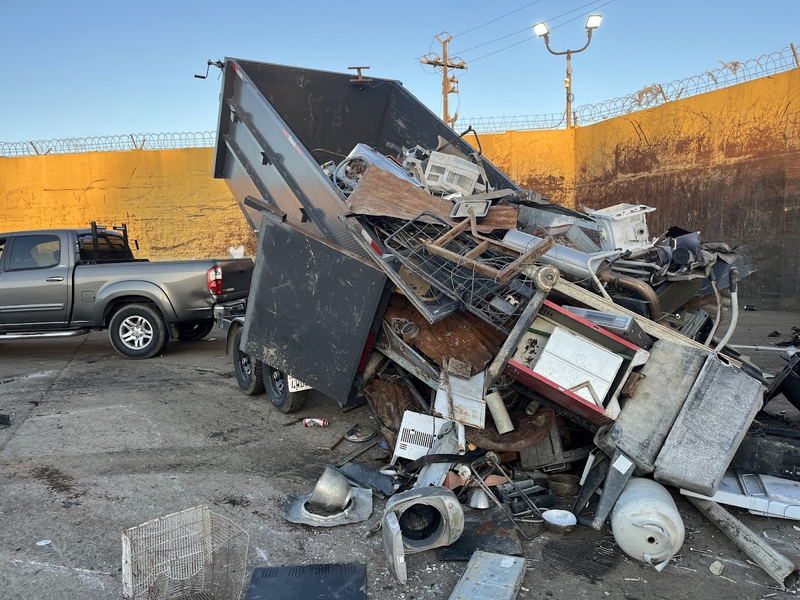
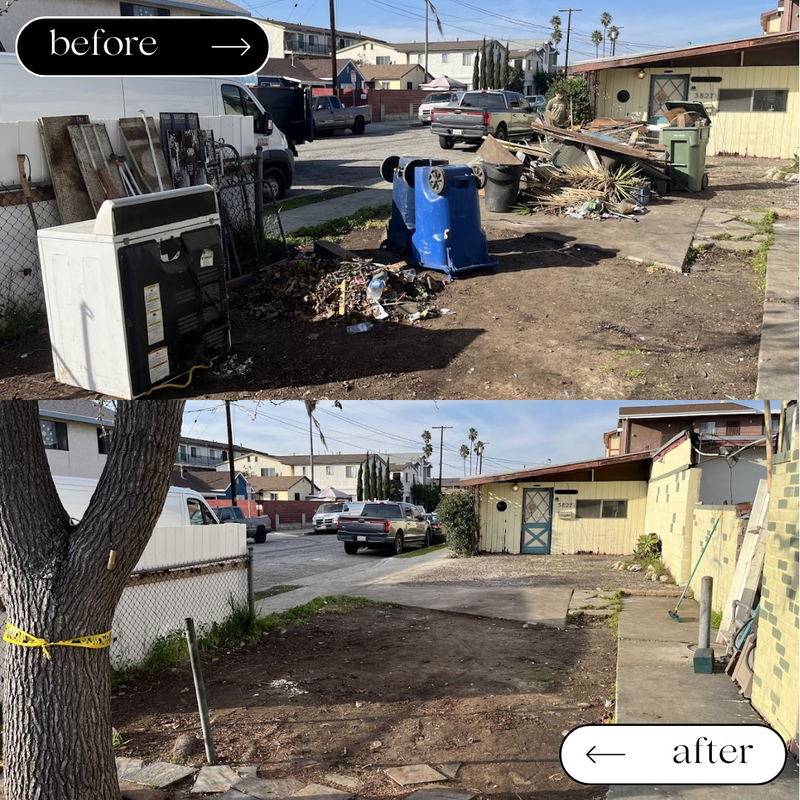
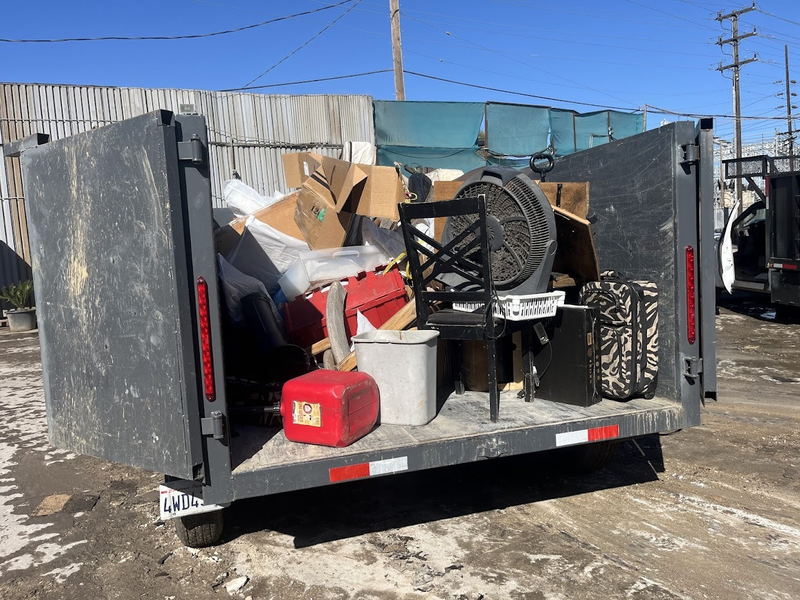
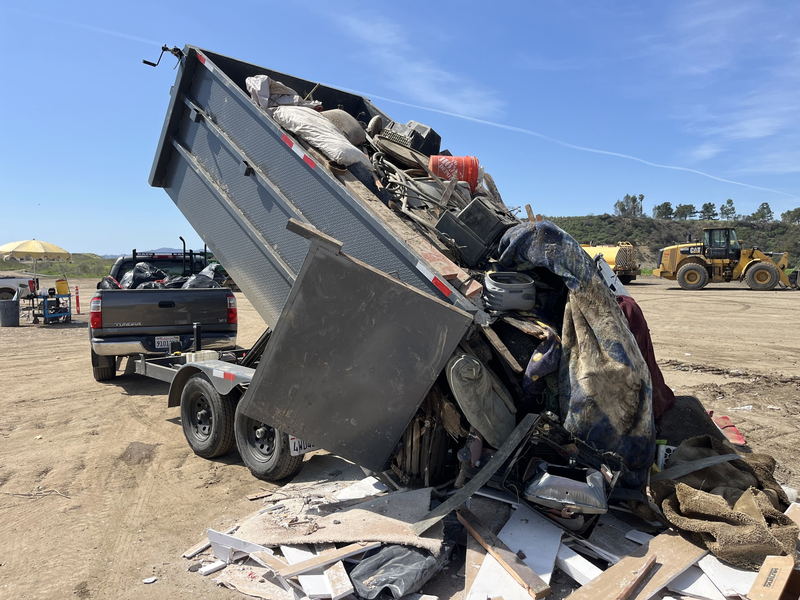
Our own crews on Los Angeles County jobs. The appliance removal we run in Torrance looks like this too: side yards, narrow walkways and the back of the property is where the work actually is.
California groups appliances with vehicles under a single chapter of the Public Resources Code called Metallic Discards, and the logic of that chapter is the logic of an appliance job. Section 42161 defines a metallic discard as any large metal article or product including metal furniture, machinery, major appliances and electronic products. Section 42166 defines a major appliance broadly enough to cover almost everything in a house that plugs in and is heavy: washing machine, clothes dryer, hot water heater, dehumidifier, conventional oven, microwave oven, stove, refrigerator, freezer, air-conditioner, trash compactor and residential furnace.
Section 42167 is the one that changes how the unit has to be handled. Materials that require special handling means, among other things, chlorofluorocarbons, hydrochlorofluorocarbons and other non-CFC replacement refrigerants injected in air-conditioning and refrigeration units; encapsulated polychlorinated biphenyls, DEHP and metal-encased capacitors in major appliances; used oil in major appliances; mercury found in switches and temperature control devices in major appliances; and any other material that becomes a regulated hazardous waste once it is removed. Section 42175 then states that those materials shall be removed from major appliances and vehicles in which they are contained prior to crushing for transport or transferring to a baler or shredder for recycling, and section 42175.1 adds that failure to comply with section 42175 is a violation of the state's hazardous waste control law. There is also a disposal ban with teeth: section 42170 says no person shall place a major appliance or other metallic discard in mixed municipal solid waste or dispose of it in or on land, and that the material shall instead be delivered to a facility to process it for reuse or recycling.
In practice that means a refrigerator, a freezer, a window or wall air conditioner, a dehumidifier and a wine cooler are all sealed-circuit units that go to a recycler equipped to recover the charge, not to a general disposal gate. The free County route is no help here either: Los Angeles County's household hazardous waste collection events are explicitly closed to white goods, along with trash, tires and solar panels, so an old chest freezer has never been a Saturday drop-off. Washers, dryers, ranges and dishwashers have no refrigerant but are still major appliances under the same chapter, and they are still mostly recoverable steel once the motor, the drum and the harness are separated.
Anything with a screen or a board on it is a different regulated stream again. CalRecycle treats non-functioning cathode ray tubes and mercury bulbs from televisions, laptops, tablets and monitors as hazardous waste, which is why Torrance lists electronic waste among the items its large item pickup will not take. California's Covered Electronic Waste Recycling Fee is collected at the register when the device is bought, and from January 1, 2026 the program also covers battery-embedded products under Senate Bill 1215, at a rate CalRecycle sets as a percentage of the retail price. That fee is what funds the free collection side, so there is no reason for a television to end up in a residential load. We separate electronics at your address and route them to a certified handler, and we tell you what went where.

Sources: California Public Resources Code, Division 30, Chapter 3.5, Metallic Discards (sections 42160–42185) · California Public Resources Code section 42166, definition of major appliance · California Public Resources Code section 42175, processing metallic discards · Los Angeles County Public Works, household hazardous waste collection centers and events · CalRecycle, Electronic Waste Management · California Department of Tax and Fee Administration, Covered Electronic Waste Recycling Fees Guide · City of Torrance, Large Item Pick Up & Illegal Dumping.

Same rule in Torrance as anywhere else in Los Angeles County. The local part is the program above, not the disposal law. Full detail on appliance removal.
This page is appliance removal in Torrance specifically. The wider service is on appliance removal across Los Angeles, and everything we haul in this city is on junk removal in Torrance. Same crew, different job: Garage cleanouts in Torrance, Furniture removal in Torrance. Pricing works the same way everywhere: how our pricing works, and the full map is on areas we serve.

We are already next door most days. The whole list is on areas we serve.
Same visit, same crew, one quoted number agreed before anything is disconnected.
TVs, CRT monitors and computers. Banned from the trash in California.
The whole garage in one visit. We sort, donate what is usable and sweep the slab.
Couches, sectionals, mattresses in the same trip, beds, desks and wardrobes carried down rather than dragged.
Booked and cleared the same day, most days, across LA County.
Refrigerant, water heaters, gas lines, and what the free City pickup will not touch.
No. The City's large item pickup lists plumbing fixtures such as water heaters under prohibited construction debris, so a water heater is excluded whether or not you have used your annual pickup. California still classes it as a major appliance under Public Resources Code section 42166, which means it belongs on a metal recovery route rather than in a landfill load. We drain it, carry it out and send it that way.
It has to come out before the metal is processed. California law lists CFCs, HCFCs and other replacement refrigerants injected into air-conditioning and refrigeration units among the materials that require special handling, and requires their removal before the unit is crushed for transport or sent to a baler or shredder. We route sealed-circuit units, which means refrigerators, freezers, air conditioners, dehumidifiers and wine coolers, to a recycler equipped to recover the charge.
No. Los Angeles County's free drive-through collection events are explicitly closed to white goods, along with trash, tires and solar panels, and they do not take anything from a business. They are for paint, chemicals, batteries, lamps and electronics, with a limit of 15 gallons or 125 pounds per trip. A refrigerator has never been in scope for them, which is why appliance removal is a truck job.
We disconnect standard water supply lines, drains and standard electrical connections as part of the job. On gas we close and cap a sound shutoff, but if a connector is corroded, perished or has been modified, we will say so and recommend a licensed trade rather than putting a wrench on it. A water heater is drained before it moves, because a full tank is the single most common way an appliance removal turns into a repair bill.
That is routine here, because the tract kitchens in Torrance were framed for the appliances of their decade and the openings repeat street by street. Doors and handles come off in the room, the jambs and the floor get protected, and the unit goes out strapped to a dolly. Nothing gets forced through an opening it does not fit, and nothing is taken apart without telling you first.
Yes, and it is a separate stream rather than part of the appliance load. California treats non-functioning cathode ray tubes and mercury bulbs from televisions, laptops, tablets and monitors as hazardous waste, which is why Torrance lists electronic waste among the items its free pickup refuses. We separate screens and boards at your address and route them to a certified handler. Say what you have when you call.
Word for word from Google. Nothing tidied.
Working with Hunter and this company was great. Gave us a quick quote over the phone after sending photos and was able to help us the SAME day. Removal was fast and easy. We definitely recommend going with this company.
Read all 67 on GoogleSee us on YelpReviews, and how to check any LA hauler
Collection rules, transfer stations and permit counters change at the city line, so each of these is written for that city rather than for Torrance. A job that straddles two of them is still one visit and one number.
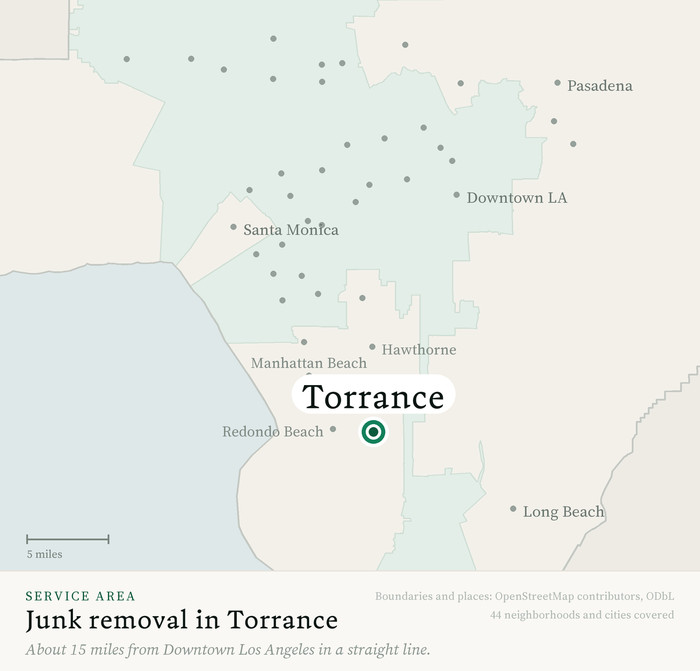
Everything we haul in the cities next door: Redondo Beach, Hermosa Beach, Gardena. The whole list is on areas we serve.
Send a photo, get a flat number back. Free, no obligation, no pressure and no call-out fee — and if your city will haul it free instead, we will tell you that too. Most requests are answered within the hour during working hours.