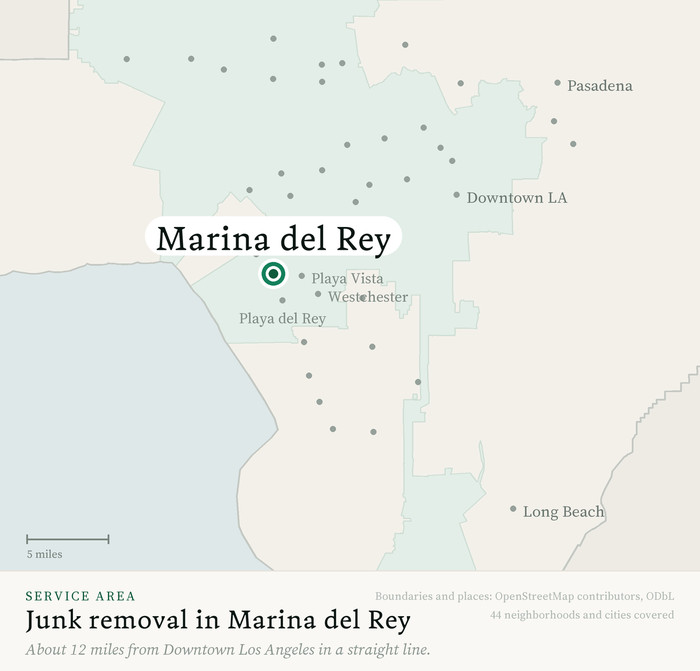
An appliance job in a leasehold building is planned backwards from one reservation. The land under Marina del Rey is owned by the County and managed by the Department of Beaches and Harbors, which leases parcels to private entities that build and manage the buildings, so the freight elevator, the service corridor and the loading area belong to a management company rather than to any public agency. If that company gives the building a two-hour window on a Tuesday, the appliance moves on Tuesday. Everything else — crew size, whether the doors come off upstairs or at ground level, whether a second trip is needed — is arranged to fit inside it.
The measurements matter more than they do in a house. A freight car has a stated capacity and a door height, and a top-mount refrigerator on a dolly is taller than it looks standing in a kitchen. Corridor corners decide whether a unit travels face-on or on its side, and some manufacturers are specific about how long a refrigerator may lie down before it is stood up again. Parking structures here are frequently too low for a box truck, so the working assumption is a lift to ground level and a carry out to a vehicle staged on the surface. Buildings that require corridor and elevator padding usually want it in place before the first trip, not after the first scuff.
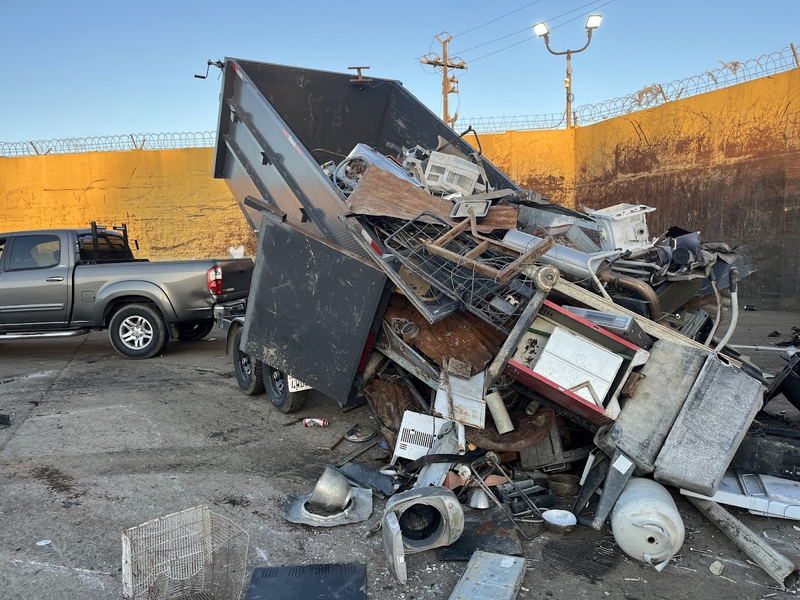
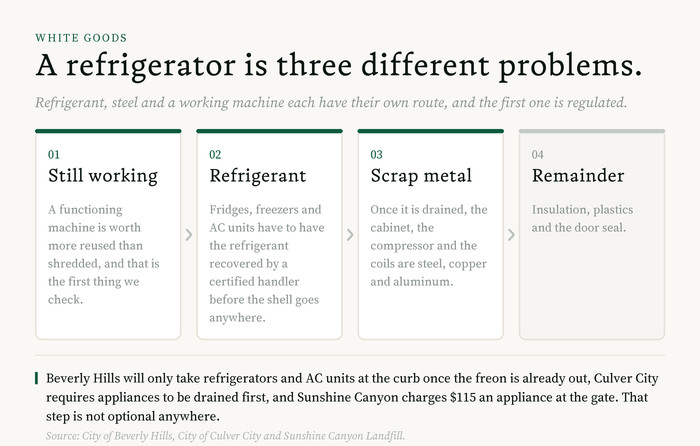
None of the refrigerant work happens in a corridor. A sealed system is left sealed and intact for transport, and the recovery is done by the party equipped and certified to do it, before any of the metal goes to a processor. Anyone offering to “let the gas off” on a loading dock so the shell is lighter is describing something that is neither legal nor, in an enclosed service area, sensible.
The waterside version is its own job. Marine refrigeration, a cabin air-conditioning unit or a galley appliance comes off a boat, along a dock, up a gangway and across a parking area before it reaches anything with wheels, and the same statute applies to it because section 42166 covers commercial as well as domestic devices. Lead-acid batteries, oils and solvents that come out of the same locker are a separate stream again and are not appliance waste at all.
Sources: Los Angeles County Department of Beaches and Harbors, Marina del Rey FAQ; Los Angeles County Department of Regional Planning, Marina del Rey long range planning; California Public Resources Code § 42166, definition of “major appliance”; California Public Resources Code § 42175, removal before crushing, baling or shredding.