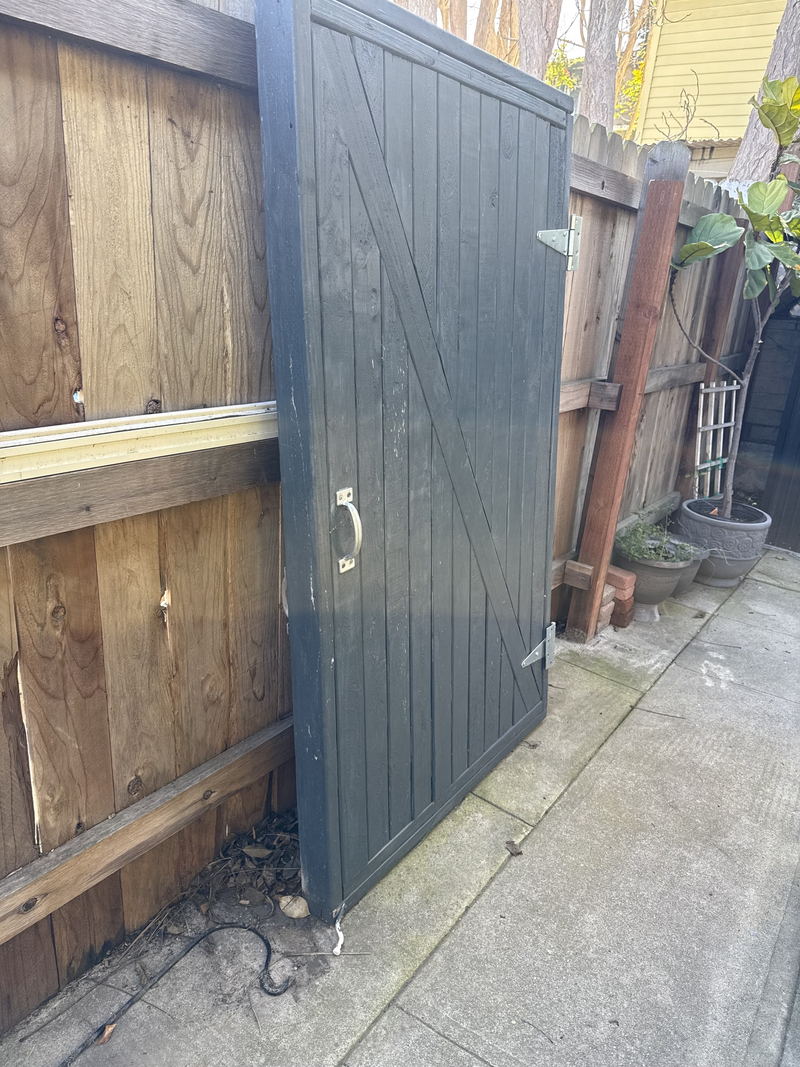
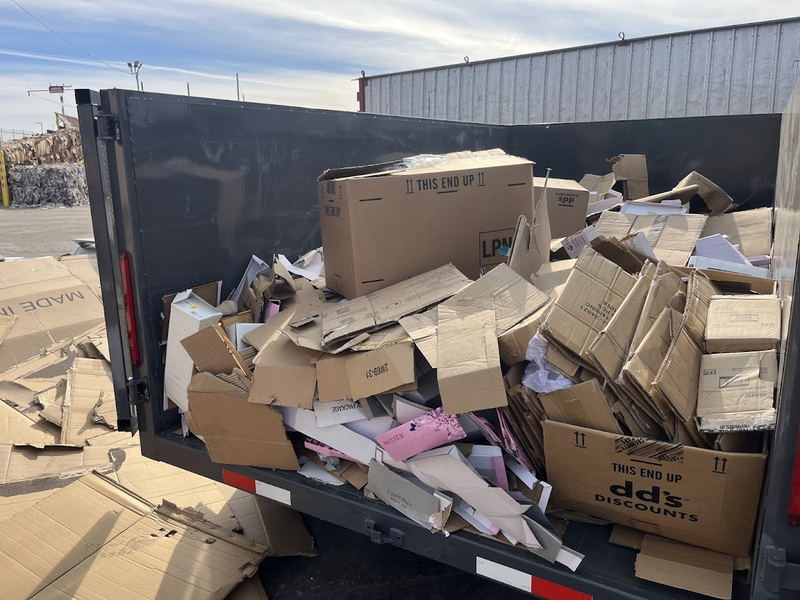
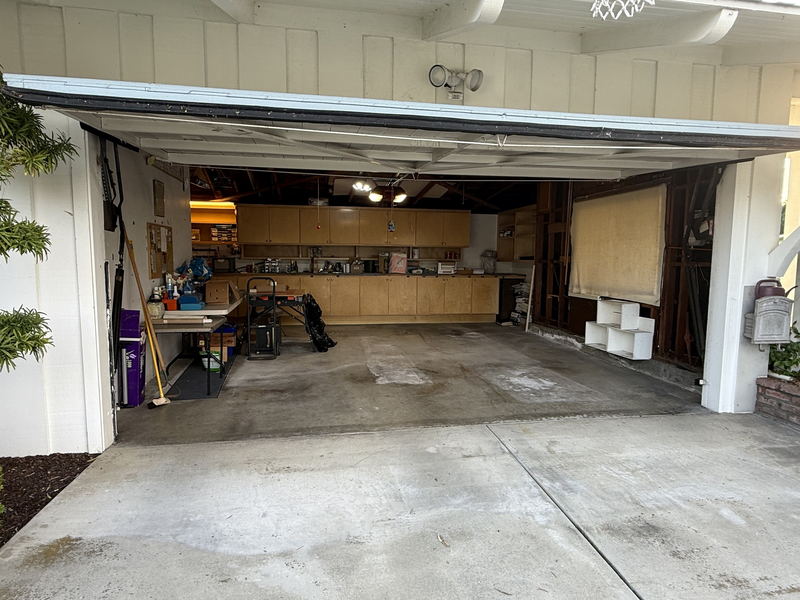
Working with Hunter and this company was great. Gave us a quick quote over the phone after sending photos and was able to help us the SAME day. Removal was fast and easy. We definitely recommend going with this company.
Wood, metal and resin sheds, playhouses, pergolas and patio covers taken apart in a controlled sequence and hauled out. Slab removal available. One flat number before we start.
Free quote, no obligation · one flat number before we start · you can also text that number
Most shed removal pages read as though a shed were a large couch. It is not. A shed is a small building, and taking one down produces a category of waste the City of Los Angeles regulates differently from household junk, in a back yard whose only exit is a thirty-inch gate. That is the whole job: sequence, access, and where the debris is allowed to go.
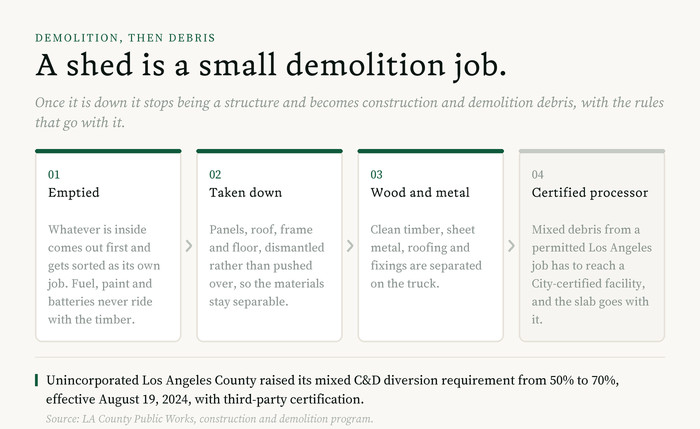
Everything inside comes out before a screw is touched, because a shed full of paint cans and tools is unpredictable once panels start moving. Hazardous material is set aside for a S.A.F.E. Center rather than loaded.
Anything built before roughly 1980 gets a proper look at the roof panels and siding first. If it looks like transite or asbestos-cement, we stop and tell you. That is an abatement job, not ours.
Roofing off, then wall panels one at a time, then the frame. Fixings undone rather than snapped. Panels are carried out flat through the gate, which is the only way most of them fit.
Lumber floor and joists out. If the slab is going, it gets broken out and lifted in sections as a weight load. Then the ground is raked and swept, and you get a clear, level footprint.
If it was built before about 1980, we look before we cut. Corrugated cement-board roof panels and flat siding sheets from that era can be transite — asbestos-cement — and paint from the same period can contain lead. Both are harmless sitting still and hazardous when broken, cut, snapped or dropped. A demolition crew that treats those panels like any other sheet is generating airborne material in your back yard, and neither you nor your neighbors will know it happened.
So we stop. We do not test, we do not cut it, we do not haul it, and we tell you plainly what we are looking at. Testing and removal is work for a licensed asbestos abatement contractor. Once that material has been cleared properly, call us back and we will take the rest of the structure and the slab.
This costs us jobs and we would rather lose them. The alternative is a crew that shrugs, breaks the panels into a truck bed and drives away — a decision you never find out about until years later.


Our own crews on Los Angeles County jobs. Side yards, narrow walkways and the back of the property is where most of the work actually happens.
Source: LASAN Construction and Demolition Recycling Program.
That is the difference between a shed job and a couch job, and the reason to ask a hauler where the load is going before you let them start. Lumber, roofing, panel board, fixings and slab material are all the same regulated stream, and we haul them the way we handle any construction debris removal job: to a certified processor that sorts the load and recovers what can be recovered. The cheapest quote on the phone is often the one with the least intention of driving there.
Sources: LASAN bulky-item pickup, El Segundo trash and recycling, City of Pasadena bulky item pick-up.
Worth saying plainly, because we point people at those programs constantly. A mattress, a couch, a bed frame: book the city, wait for your trash day, pay nothing. Same for a few tied bundles on our yard waste page. A shed is where that advice stops working, and knowing which case you are in is most of what a straight answer is worth. Our guide to what junk removal costs in LA sets out the same distinction between volume jobs and weight jobs.
A small accessory structure often comes down without a permit. Often is not always, and we will not publish a square-footage threshold we cannot source. LADBS rules turn on the size of the structure, whether it sits on a slab or a footing, and whether power, gas or plumbing was ever run to it — a converted studio shed with a subpanel is a different conversation from a resin box on gravel. Ring LADBS about your structure before the day. Pulling a permit is the owner's or contractor's job, not the hauler's.
Concrete is a weight job. A shed pad gets broken out with a breaker, cracked into liftable sections and carried, usually across grass where a barrow sinks, with the reinforcement mesh cut out as you go. It is priced by weight rather than by how big the pad looks, because that is how the processor charges us. You get back a level footprint ready for turf or a new structure, rather than a slab to design around forever.
The biggest variable in an LA back yard. Side gates are narrow, houses sit close together, and hillside lots put a flight of steps between the structure and the truck. Panels come out flat, lumber gets cut to carryable lengths, and crew size is set by carry distance more than by the size of the shed. Send a photo of the route out along with the shed and the quote gets far more accurate.
Back-lot sheds behind bungalows in Burbank and Glendale, large lumber structures and patio covers across Woodland Hills and Encino, tight side-gate access in Santa Monica and Culver City, and hillside yards with a stair carry above Silver Lake. The full list is on the areas we serve page.
A shed rarely leaves alone. The same visit usually clears the overgrowth around it, which is yard waste removal, the spa on the other side of the yard, which is hot tub removal, and whatever moved into the garage when the shed filled up. Priced together, one flat number, before anything comes apart.
Call or text (323) 230-0777, or send photos to team@lajunkhauling.com. One flat number before we start, no obligation, and an honest answer if your city can do it for free instead.

Once the shed is down it is construction debris, so the same certified processor rule applies as on any permitted job.
What people ask before a backyard structure comes down.
It is quoted flat, from photos or a walkthrough, before anything is unscrewed. Two things drive the number: how much material the structure produces, and whether there is a concrete slab under it. Lumber and metal shells are volume; slab, roofing tile and masonry are weight. See how our pricing works.
Both, and in that order. We take the structure apart in a controlled sequence — contents out, roof off, panels down, frame last — rather than pulling it over and dragging the pieces. Controlled teardown is how you avoid a wall landing on a fence, a neighbor's property or a gas meter, and it is also how a shed comes out of a back yard through a side gate.
We stop. Sheds and outbuildings built before roughly 1980 can have transite or asbestos-cement roof panels and siding, and paint from that era can contain lead. We do not cut, break or disturb suspected material, and we will say so on site rather than take the job. Testing and removal is work for a licensed abatement contractor, and once the material is cleared we will come back for the rest of the structure.
A small accessory structure often does not need one, but that is not a promise and we will not pretend it is. LADBS rules vary with the size of the structure, whether it sits on a slab or a foundation, and whether power, gas or plumbing was run to it. Check with LADBS for your specific structure before booking — it is one phone call, and it is cheaper than a stop-work notice.
Yes. Slab removal is a separate part of the job: the pad has to be broken out with a breaker, lifted in sections, and hauled as a weight load rather than a volume load. Access matters enormously, because broken concrete has to be carried rather than wheeled on soft ground. Tell us on the call if you want the slab gone, since it changes the crew and the truck.
No. Demolition debris is construction material, and the free programs exclude it explicitly: LASAN's bulky-item pickup will not take construction materials, El Segundo's program excludes dirt, concrete and asphalt, and Pasadena's excludes C&D. There is genuinely no free DIY route for a demolished shed in Los Angeles, which is worth knowing before you spend a Saturday taking one apart.
Playhouses, pergolas, patio covers, dog runs, chicken coops, aviaries, old greenhouses, trellis, arbours and rotten decking. Anything freestanding in a back yard that has stopped being useful. Structures attached to the house, anything holding up part of a roof, and anything with live electrical service go through the right trade first.
A typical resin or metal garden shed with the contents already out is a few hours. A lumber shed on a slab, or a large patio cover, is most of a day. Add time if the only route out is a narrow side gate, which in Los Angeles is most back yards.
Yes, and that part is usually bigger than people expect. Paint cans, garden chemicals, old tools, bikes, lumber cutoffs and a decade of stored boxes. Anything hazardous — paint, solvents, pesticides, pool chemicals, fuel — comes off the load and goes to a S.A.F.E. Collection Center, free for City of LA and LA County residents, capped at 125 pounds or 15 gallons per visit.

Word for word from Google. Nothing tidied.
Working with Hunter and this company was great. Gave us a quick quote over the phone after sending photos and was able to help us the SAME day. Removal was fast and easy. We definitely recommend going with this company.
Read all 67 on GoogleSee us on YelpReviews, and how to check any LA hauler
Sourced guides to what Los Angeles will take for nothing, who to call and what the rules actually say.
A dumpster on an LA street needs a permit and a hauler permit behind it. Which one is right depends on four things, not on price alone.
Food scraps in the green bin, palm fronds that jam the truck, trunks the city will not take, and the state law behind all of it.
The state and city penalties, why liability follows the waste back to whoever produced it, and how to get a pile cleared off your street.
Send a photo, get a flat number back. Free, no obligation, no pressure and no call-out fee — and if your city will haul it free instead, we will tell you that too. Most requests are answered within the hour during working hours.