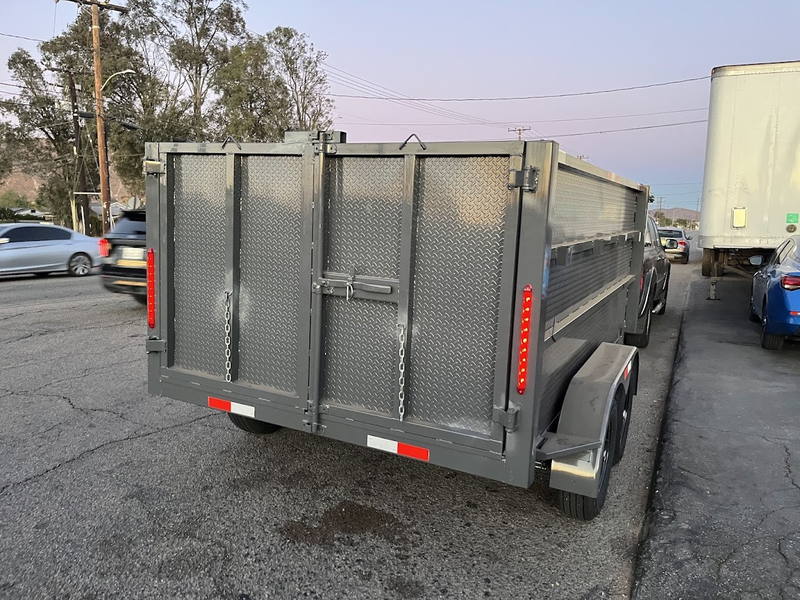
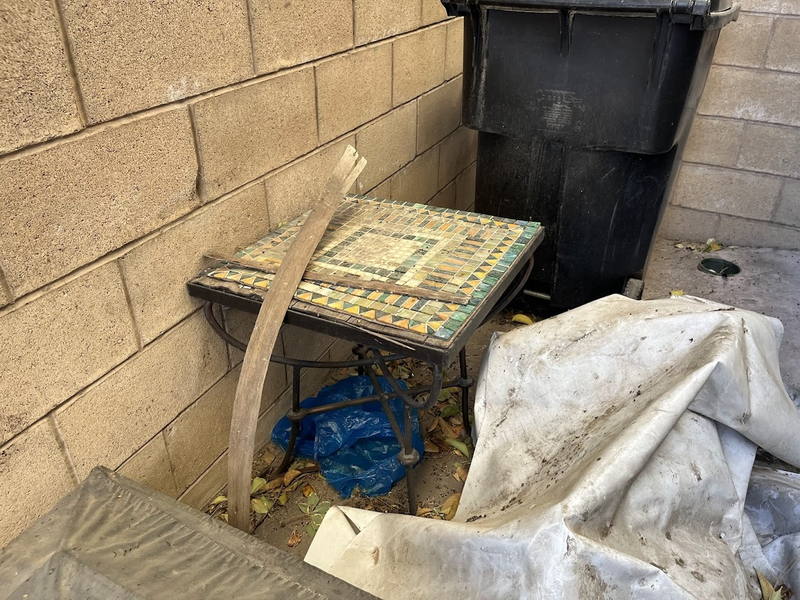
Hunter is truly dedicated on providing the most excellent of removal of unwanted junk from your home or office. Always on time, very efficient at his job in a timely manner. I would recommend him for any junk removal you may have.
A spa is a demolition job, not a pickup, and almost all of them leave a Los Angeles back yard in pieces through a thirty-inch gate. We drain it, isolate the 240V, cut the shell down, take the decking and surround with it, and wash the pad. Same-day across LA County, one flat price agreed from your photos before anything is cut.
Free quote, no obligation · one flat number before we start · you can also text that number
Hot tub removal is demolition, not a pickup. A spa is drained, the 240V circuit isolated and any gas line capped, then the shell is cut into sections on site and carried out through the gate with the decking, skirt and steps. Los Angeles has no free city route for a spa.
Almost every hot tub in Los Angeles was placed before the yard around it was finished. Then came the deck, the fence, the raised beds and the pergola, and now there is a three-quarter-ton acrylic shell standing in a space with a thirty-inch gate. That is the actual job, and it is why a spa is quoted as demolition rather than as a very large item.
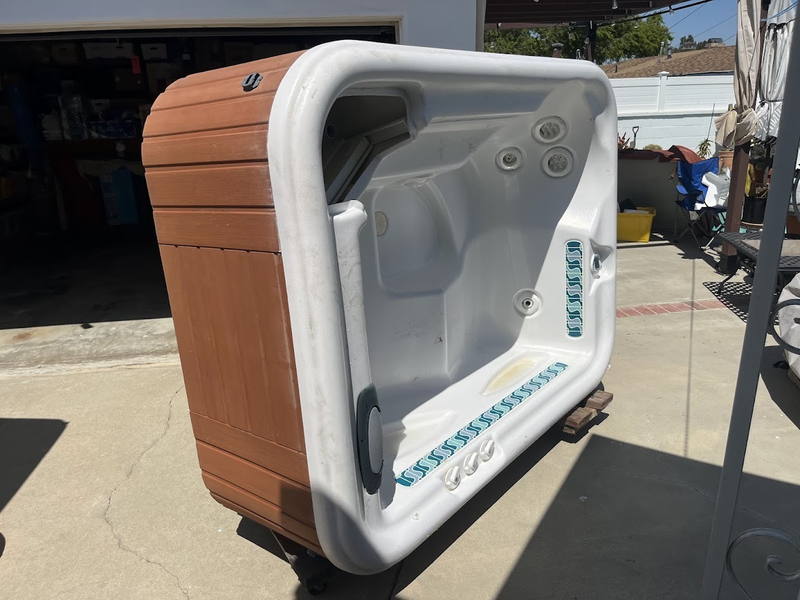
Jacuzzi is a brand name that became the word, so people call us about jacuzzi removal, spa removal and hot tub removal and mean the same thing. Whatever is printed on the skirt, what is standing in the yard is an acrylic shell over a fiberglass laminate, a cabinet packed with sprayed foam, and a 240-volt equipment bay.
Can you do mine? If it is in Los Angeles County, almost certainly. Gate width, stairs and the route to the street decide the job, not the badge on the tub — seven versions of this job, from a portable spa to a nineteen-foot swim spa to a pile a contractor already cut up.
How soon? Same-day across the county when the spa is already drained and the power is off. If it is still full, the drain is the long pole: a garden-hose siphon takes most of an afternoon, a trash pump clears it in about twenty minutes.
What decides the price? Volume and weight, not an item count, and the three photos that settle it are the tub, the gate it has to leave through, and whatever got built around it. You get one flat number back before anyone turns up with a saw.
Do I need a crane? Almost never, and it is almost never cheaper — crane-out or cut-up has the three cases where a lift is the right call. And where does it all end up? Five destinations, one of which is governed by state hazardous-waste law: the materials and the deck.
Want the real number for your spa? Three photos settle it: the tub, the gate it has to leave through, and whatever got built around it. Text them to (323) 230-0777 or email team@lajunkhauling.com. You get a flat number back before anyone turns up with a saw.


Our own crews on Los Angeles County jobs. Side yards, narrow walkways and the back of the property is where most of the work actually happens.
Seven calls that all open with the same three words turn out to be seven different jobs, priced on different things. This is the honest split, so you can tell us which one you have before anybody drives out.
| The job | What it actually involves | What moves the price |
|---|---|---|
| Portable spa removal | The standard back-yard tub, standing on a slab, pavers or a deck. Drained, de-energized, shell cut into sections, carried out through the gate. | Gate width, stairs, and how far the pieces have to be carried to the truck. |
| Jacuzzi and spa demolition | Same work, different word. Jacuzzi is a brand that became the noun, and nothing about the job changes with the badge on the skirt. | Nothing. It is priced as the tub in front of us, not as the name on it. |
| In-ground and sunken spa demolition | A shell set into the ground or into a raised deck. Once it is out there is a void, and in the City of Los Angeles that is a grading permit either way. | Whether the shell leaves the site or stays in place, and who is doing the backfill. |
| Swim spa and exercise spa removal | Thirteen to nineteen feet of shell with a second equipment bay. Often a two-visit job, and the one case where a lift is genuinely on the table. | Length, access, and whether a boom can legally reach it. |
| Deck and surround removal | Boards, joists, posts, steps, the pergola over it and the fence panel that comes off for access. Usually the larger half of the volume. | Square footage, whether the lumber is pressure-treated, and footings. |
| Above-ground pool removal | Steel or resin wall, liner, and the sand base under it. Flat-packs smaller than a spa but weighs more than people expect. | Diameter, and whether the sand base is going too. |
| Hot tub disposal only | You have already cut it up, or a contractor left the pieces. We load the pile and route each material properly. | Volume, and whether treated lumber is mixed into it. |
A cover and lifter on their own count too. A waterlogged spa cover can pass 150 pounds, which is why it defeats two people and a pickup truck far more often than the tub does.
Nobody should have to book a site visit to find out what a spa costs to remove, and you should never get a number that moves once the saw is out. Three photos settle it.
Text or email them and you get one flat number back, agreed before anything is cut, covering the labor, the cutting, the carry-out and the disposal of every material in the table below. If the deck is coming too it is in that number. If an electrician has to come first, we say so rather than finding out in your yard. And if the spa still runs and is worth more to you sold than scrapped, we will tell you that too.
Send them now and you will have a number today. Text the three photos to (323) 230-0777 or email team@lajunkhauling.com. Free quote, no obligation, and the number you get back is the number you pay.
Seven passes, in this order. Change the order and you are cutting into a live circuit or draining a spa you have already taken the pumps out of.
Around 455 gallons on a seven-seat tub. A garden-hose siphon takes most of an afternoon, a trash pump clears it in about twenty minutes, and the last inch standing in the footwells comes out with a wet vac. Where the water is allowed to go is set out below, and it is not a detail — most of this city's storm drains run to the ocean.
Off at the breaker, then the whip pulled and the conductors capped at the GFCI disconnect by a licensed electrician. A spa circuit is 240 volts and typically 50 amps. Nothing is cut, lifted or tipped until that is done and verified.
Plenty of older Los Angeles installs — particularly a spa sharing a heater with a pool — run on natural gas. The line is shut at the valve and capped by the right trade. A capped line is the difference between a clear slab and a gas stub under a new deck.
Pumps, blower, heater, control pack and ozonator come out as whole units before the shell is touched. This is where the copper and the recoverable steel are, and it is far easier to separate standing up than out of a pile of cut acrylic.
On a tarp, on site, with a reciprocating saw and a demolition blade. Sections are sized to the narrowest point on the route out, which in Los Angeles is nearly always a thirty to thirty-six inch side gate. Respirators and eye protection, because cutting a fiberglass laminate makes dust you do not want in a yard.
The cabinet skirt, the steps, the deck boards and joists the tub was sitting in, the pergola over it, and any fence panel that came off for access. If it only goes because the spa went, it goes on the same truck.
Debris off, screws and staples swept, slab washed down. If the spa was sunk rather than standing, what is left is a void, and that is a permit conversation we will walk you through before we quote — not after we have cut the shell up.
You do not have to work out which of those seven your spa needs. Send photos to team@lajunkhauling.com or call (323) 230-0777 and we will tell you what the job actually is — including whether an electrician has to come first, and whether the deck is coming with it.
Two identical spas, two miles apart, are not the same job. The shell is a fixed problem. The route out is the variable, and in this city the route out is usually the thing somebody built afterwards.
| Where it sits | What actually changes |
|---|---|
| On a slab in the yard, gate access | The straightforward version. Drain, disconnect, cut into gate-width sections, carry out, wash the slab. Two to four hours, one visit, nothing left behind. |
| Set into or onto a deck | The deck has to come apart before the shell can, and it comes apart in the right order — boards, then the framing that is carrying the tub, never the reverse. The decking, joists and skirt then travel as construction debris, by weight. This is the commonest Los Angeles install and the one most often underquoted. |
| Sunk into a patio, or set in gunite | Now there is a void to deal with as well as a shell, and a void is a permit conversation rather than a hauling one. Concrete and tile are weight, not volume. Site visit, always. |
| Roof deck, balcony or upper terrace | Everything leaves through the building, in pieces sized to a stairwell or an elevator car rather than a gate, with floor and wall protection going in first. Section sizes get smaller, piece count goes up, and the carry is the clock. |
| Hillside lot with stairs only | Common from the Hollywood Hills through Mount Washington and Silver Lake. If the spa was craned in over the house, it is coming out the same way or it is coming out in small pieces. A hundred-and-twenty-step carry is measured in hours, and those hours are the quote. |
Not sure which of those five your yard is? Most people are not, and it is the single thing that moves the price. Two photos over text to (323) 230-0777 and we will tell you which row you are in and what it means, before anything is cut.
The honest version of the crane conversation is short. There are three reasons to lift a spa rather than cut it, and only three: it is being kept and moved intact, there is genuinely no ground route to the street, or a structure between the tub and the street cannot be disturbed. On a hillside lot above Cahuenga or a canyon property off Mulholland, the second reason is real.
What kills a crane plan in Los Angeles is rarely the crane. It is the boom path. LADWP overhead service drops run down the back of a great many hillside lots, there is no legal way to swing a load through them, and on a narrow canyon street there is often nowhere to set up that leaves a travel lane. The city permit that covers a crane or a boom pump standing in the street is a Building Material Permit from StreetsLA, and the one-week, no-Sunday limit on it is what turns a lift into a scheduling problem. On most jobs we quote both routes and the saw wins.
Source: StreetsLA policies and guidelines, Building Material Permits.
Two different things get confused here constantly, so take them apart. Removing a portable above-ground spa is not a building-permit item. There is no demolition permit for carrying a tub out of a back yard, and anybody telling you there is has not read the code. What is permitted trade work is the electrical disconnection: a spa is fed by a dedicated 240V circuit, usually 50 amps, through a GFCI-protected disconnect that has to sit within sight of the tub and at least five feet from the water. It is de-energized at the breaker, the whip is pulled and the conductors are capped at the source by a licensed electrician. If the spa shares a heater with a pool there is a gas line as well, and it is shut at the valve and capped by the right trade. Neither of those is a hauler's job, and we sequence around them rather than pretending otherwise.
A spa that is sunk into the ground is a different animal, because once the shell is gone there is a hole. In the City of Los Angeles, backfilling a pool or spa shell needs a grading permit either way. Two routes are published. Backfill with structural compacted fill suitable for supporting footings: the existing shell is removed from the site, all fill is compacted to a minimum of 90 percent relative compaction measured by ASTM D1557, a compaction report and certificate of compliance go to the Grading Division, three inspections are called, and a Grading Pre-Inspection report is required if the property sits in a Hillside Grading Area — which covers a very large share of this city. Or leave the shell in place and backfill with uncertified fill: landscaping use only, not permitted where the ground slopes steeper than ten percent, and drainage holes of at least twelve inches diameter have to be cut in the bottom of the shell so groundwater cannot pond under the fill.
One more piece of state law is worth knowing because it surprises people. California's Swimming Pool Safety Act defines a swimming pool as any structure intended for swimming or recreational bathing holding water over eighteen inches deep, and says the term “includes, but is not limited to, hot tubs, spas, portable spas, and nonportable wading pools.” A hot tub is legally a pool. That is why a spa inherits pool rules on enclosures and covers while it is still in the yard, and why a permit counter stops treating it as patio furniture the moment it is in the ground.
And a boundary worth stating plainly: the City of Los Angeles is one of 88 cities in this county. Beverly Hills, Pasadena, Burbank, Glendale, Santa Monica, Culver City and Long Beach each run their own building department with their own counter. We will tell you which rules you are under before the quote, not after.
Sources: LADBS Information Bulletin P/BC 2026-111, Backfill of Swimming Pools (effective January 1, 2026; LABC 106.1.2 and 7011.3), California Health & Safety Code §115921.
This is the part of a spa removal that people get wrong at no cost to themselves and real cost to everyone downstream. The City of Los Angeles adopted its stormwater ordinance in 1998 and it prohibits discharging non-stormwater into the storm drain system. The ordinance then lists a set of conditionally exempt discharges, and dechlorinated/debrominated swimming pool and spa discharges are on that list. The exemption is conditional on the word at the front of it. Most of this city's storm drains run to the ocean, which is why the condition exists.
In unincorporated LA County, Public Works publishes the legal methods of pool and spa wastewater disposal in writing, and there are four: to the sanitary sewer through a three-inch P-trap legally installed under permit, which applies to fresh water only and never to a private septic system; onto your own property where the lot is large enough that runoff cannot encroach on a neighbor, or into a dry well; removal by tank truck or pumping service; or, failing all of those, a method acceptable to the Regional Water Quality Control Board after testing. Discharging to a County-maintained storm drain needs its own connection permit, the water has to be properly dechlorinated first, and the County's stated acceptable method is to let it stand with no additional chlorine added for five days. Filter backwash never goes to the storm drain.
Two practical traps. A salt-water spa rules out the County sewer route, which is written for fresh water. And a spa that has been sitting dead for two years is usually not chlorinated at all any more — it is anaerobic, and that water wants the sewer rather than the gutter regardless of what the exemption allows.
Sources: City of Los Angeles Ordinance No. 183833 amending LAMC 64.70, LA County Public Works, Building and Safety Division: legal methods of swimming pool waste water disposal.
A hot tub is seven materials pretending to be one object, and they have five different destinations. Separating them on your driveway is the whole difference between a spa being mostly recovered and a spa going to a hole in Sylmar.
| Part | What it is | Where it goes |
|---|---|---|
| Shell | Cast acrylic sheet thermoformed over a fiberglass and polyester resin laminate | No recycling stream in LA County. Landfilled as construction debris. This is the honest answer and nobody else prints it. |
| Insulation | Sprayed polyurethane foam, bonded to the back of the shell and around the plumbing | Landfill. It cannot be separated from the shell without destroying both. |
| Equipment bay | One or two circulation pumps, jet pumps, blower, heater element, control pack, ozonator | Scrap metal. The copper windings and the heater's copper or titanium element are the genuinely valuable part of an old spa. |
| Frame | Pressure-treated or redwood lumber, sometimes galvanized steel on later models | Steel to scrap. Treated lumber is banned from green waste and goes out as C&D. |
| Cabinet and skirt | Cedar, or a wood-polymer composite on anything built after about 2005 | Cedar can be reused or mulched. Composite cannot — it is landfill. |
| Plumbing | Flexible PVC, ABS manifolds, brass and plastic fittings | Brass to scrap, the rest to landfill. A six-person spa holds well over a hundred feet of it. |
| Cover and lifter | Vinyl skin over a closed-cell foam core, aluminum or steel lifter arms | Lifter to scrap. The cover is landfill, and a waterlogged one can pass 150 pounds on its own. |
| Decking and surround | Boards, joists, posts, steps, pergola, fence panels removed for access | Clean untreated timber has a route. Treated and painted lumber goes to a certified C&D processor, by weight. |
The deck around a spa is usually pressure-treated lumber, and in California pressure-treated lumber is treated wood waste — presumed hazardous, and illegal to burn, chip, grind or mulch. It can only go to a landfill specifically authorized to take it, and in Los Angeles County the state’s list of authorized landfills is three facilities long.
Measure the deck before you ring anybody. A spa occupies about forty-nine square feet. The deck it is set into is routinely two to four hundred, plus joists, posts, footings, steps and a rail.
On most of the jobs we do the decking out-weighs the tub. A quote that covers “the hot tub” and not the deck it is sitting in is a quote that changes on the day.
What makes the deck more than volume is what it is made of. Since 2004 almost all ground-contact framing lumber sold in California has been pressure-treated with copper preservatives. Under state law that is treated wood waste, handled as hazardous waste unless it goes out under the Alternative Management Standards — Health and Safety Code 25230 to 25230.18, enacted by Assembly Bill 332, in effect since August 31, 2021.
A generator may presume the wood is hazardous rather than pay for lab analysis, and then has to actually follow the standards. Almost nobody does. This is what they require of the contractor standing on your driveway:
Two pieces of good news. No hazardous waste manifest is required and no registered hazardous waste hauler either — a shipping document, bill of lading or invoice is enough, and any hauler may legally carry it. And if you are pulling the deck yourself, a household may store under 1,000 pounds of it for up to 30 days after it comes out of use. Past 30 days, or past 1,000 pounds, the rules above become yours.
Where it is allowed to land is what actually constrains the job. Treated wood waste may only go to a hazardous waste landfill, or to a solid waste landfill the state has specifically authorized to take it. For the whole of Los Angeles County the State Water Resources Control Board lists four:
Three in practice, for a county of ten million people. That is the entire legal set of destinations for your old deck, and it is why we separate the treated lumber from everything else on site rather than arguing about it at the gate.
Sources: DTSC, Requirements for Generators of Treated Wood Waste (HSC 25230–25230.18); State Water Resources Control Board, Treated Wood Waste Disposal Facilities; Chiquita Canyon Landfill, closed to waste acceptance January 1, 2025. Verified November 4, 2026.
Work it through and it stops being abstract. An eight-by-seven-foot shell cut into sections is mostly curved air — it fills a serious amount of truck and weighs a few hundred pounds. The deck that shell was sitting in is the opposite: a modest stack of joists and boards that a transfer station weighs by the ton. Price the job on volume alone and the lumber is free. Price it on weight alone and the shell is free. Neither is a quote, which is why per-item pricing does not survive contact with a hot tub.
Then there is the third input, and on Los Angeles properties it is frequently the largest one: how far the pieces have to travel and what they travel through. A slab beside an open gate and a hundred-and-twenty-step hillside carry can involve the same tub, the same shell and the same disposal, and take four times the crew hours. Decking adds hours before the shell is even reachable. That is labor, and it is quoted as labor rather than hidden in a truck fraction.
The disposal side is not guesswork either, and it is the reason the cheap quotes end with a frame left in your yard. Transfer stations and landfills in this county bill every material on a one-ton minimum, charge municipal solid waste by the ton, and add a separate hard-to-handle or bulky-waste charge per item on top of disposal — a spa is a hard-to-handle item that conveniently weighs well under a ton, so it attracts both. There is also a per-load environmental fee, and a penalty for arriving with the load untarped.
Gate rates at Sunshine Canyon Landfill in Sylmar, published and in effect as of July 1, 2024: all materials charged a one-ton minimum, municipal solid waste $120 per ton, hard-to-handle and bulky waste $275 each plus disposal, environmental fee $19.71 per load, untarped loads $175 per load. Those are the landfill's rates, not ours. Source: Sunshine Canyon Landfill disposal costs.
What you get from us is one flat number, from photographs or a site visit, before a blade touches the shell — and if the spa is worth more running than scrapped, you will hear that first. How our pricing works sets out the rest.
LASAN's bulky-item pickup publishes two lists: what it will collect and what it will refuse. A hot tub is on neither, which is the giveaway — it was never contemplated. The same is true of pool tables, pianos and safes. These are the four objects every municipal program in the country quietly leaves off the page, and they are the four we get called about most.
So the options are the real ones. Sell it while it runs. Give it away while it runs. Or have it taken apart properly, with the metal going to scrap, the lumber going to a C&D processor, and the shell going where a shell has to go. What does not exist is a free municipal route, and a weekend spent looking for one is a weekend.
Source: LASAN bulky-item pickup.
The same crew and the same approach handles the other things nobody else will quote: swim spas, pool tables, pianos, gun safes, above-ground pools, garden sheds — see shed removal — playhouses, pergolas and rotten decking. Where the job leaves a pile of lumber, concrete or tile behind, that goes out as construction debris, and where it exposes a neglected yard, as yard waste removal. If the spa is going because the whole property is being cleared, it usually rides with an estate cleanout, and the appliances and furniture that come with it are appliance removal and furniture removal in the same visit.
Hillside decks above Hollywood and Studio City where the only route is the stairs, deck-set spas across Sherman Oaks, Encino and Woodland Hills, patio installs in Pasadena and Glendale, and tight beach lots in Hermosa Beach and Manhattan Beach where everything leaves down the alley. Full list on the areas we serve page.
Call or text (323) 230-0777, or send photos to team@lajunkhauling.com. Flat number, no obligation, and an honest answer if the city can do it for free.

Spas, pianos, pool tables and safes are the items every municipal program quietly leaves off its list. See how our pricing works for what moves a job like this between tiers.
What people ask before a spa gets cut up in their back yard.
In sequence, and the order matters. Drain the water, de-energize and disconnect the 240V circuit, cap any gas line, pull the pumps and heater out of the equipment bay, cut the shell into sections on a tarp, then take the skirt, steps, decking and surround with it. The shell is cut because a spa is almost always installed before the fence and the deck go in around it, so the hole it came through no longer exists.
Yes. Jacuzzi is a brand, in the same way Hoover is a brand, and it became the word most people in Los Angeles use for any portable spa. Whatever is written on the skirt — Jacuzzi, Hot Spring, Sundance, Cal Spas, Caldera, or nothing at all — the job is identical: an acrylic shell over a fiberglass laminate, a foam-packed cabinet, and a 240V equipment bay.
It has to be drained first, and that is hours rather than minutes. A seven-seat spa holds around 455 gallons and weighs roughly 790 pounds empty and 5,810 pounds full — close to three tons. A garden-hose siphon takes most of an afternoon; a trash pump clears it in about twenty minutes, and the last inch in the footwells comes out with a wet vac. Tell us when you book and we will either schedule around your drain or bring a pump.
In the City of Los Angeles the stormwater ordinance prohibits discharging non-stormwater to the storm drain, and lists dechlorinated or debrominated pool and spa water as a conditionally exempt discharge. So the water is fine once it has stopped being chlorinated, and an illicit discharge before that. In unincorporated LA County the published legal routes are a three-inch P-trap to the sanitary sewer under permit, discharge on your own property where the runoff cannot reach a neighbor, a dry well, or a pump-out truck — and the County's accepted way to dechlorinate is to let the water stand five days with nothing added. Salt-water spas are the catch: the County's sewer route is for fresh water only.
Almost always, and not because it is quicker. Hot tubs are craned or wheeled into a yard before the fencing, decking, patio and landscaping go in, and then the yard is closed up around them. Cutting the shell into sections is usually the only way it leaves without taking a fence down or putting a crane over the house. We cut on site, on a tarp, in pieces sized to the narrowest point on the carry-out route — usually a thirty-inch side gate.
A portable spa runs on a dedicated 240V circuit, typically 50 amps, fed through a GFCI-protected disconnect that code requires to sit within sight of the tub and at least five feet from the water. It gets switched off at the breaker and disconnected by a licensed electrician before anything is cut. We do not touch live circuits and no reputable hauler will. Where a spa shares a heater with a pool, there is usually a gas line too, and that gets shut at the valve and capped by the right trade, not left open under a deck.
Taking a portable above-ground spa away is not a building-code event — there is no demolition permit for carrying a tub out of a yard. Filling in the hole a sunken spa leaves is a different matter. LADBS requires a grading permit to backfill a pool shell either way: with structural compacted fill, which means the shell comes off the site and the fill is compacted to 90 percent relative compaction with a compaction report; or with uncertified fill and the shell left in place, which is landscaping-only, needs twelve-inch drainage holes in the bottom, and is not allowed on ground sloping steeper than ten percent. The electrical and gas disconnection is its own permitted trade work. Outside the City of LA, each of the other 87 cities in the county has its own building department.
Yes, and it is usually the larger half of the load. Lumber decking and joists, the cabinet skirt, the steps, the gazebo or pergola over the tub, and any fence panel that had to come off for access. That is construction debris, which is why a spa job is quoted on weight as well as volume.
No. LASAN's bulky-item pickup publishes what it takes and what it refuses, and a hot tub appears on neither list — along with pool tables, pianos and safes. Landfills classify a spa as hard-to-handle bulky waste and charge a per-item premium on top of tonnage, with a one-ton minimum on every material. There is no free route for a spa anywhere in Los Angeles, which is worth knowing before you spend a weekend looking for one.
In pieces, to three or four different places, because a spa is not one material. The acrylic-over-fiberglass shell and the polyurethane foam bonded to it have no recycling stream anywhere in LA County and are landfilled as construction debris. The pumps, heater element, blower and lifter arms go to a scrap metal yard, and they are the only genuinely valuable part of an old tub. The pressure-treated lumber from the deck and frame is treated wood waste under Health and Safety Code 25230, which may only go to a landfill the state has authorized to take it — and for the whole of Los Angeles County that list is Burbank, Calabasas and Sunshine Canyon, since Chiquita Canyon stopped accepting waste on January 1, 2025. What does not exist is a free municipal route: a hot tub appears on neither LASAN’s accepted nor its refused bulky-item list.
If you are in Los Angeles County, almost certainly. We run the whole basin from the coast to the San Gabriel Valley — hillside decks above Hollywood and Studio City, deck-set spas across Sherman Oaks, Encino and Woodland Hills, patio installs in Pasadena and Glendale, and beach lots in Hermosa Beach and Manhattan Beach where everything leaves down the alley. Access matters more than distance on a spa job: a tub thirty minutes away with a driveway beside it is an easier job than one fifteen minutes away at the top of forty stairs. Send photos of the tub, the gate and the route to the street and you will get a flat number for your address.
If it runs, yes, and we will tell you so rather than load it. A spa under roughly eight years old, holding temperature, with no cracks in the shell and a dry equipment bay has a real resale market in this city. A dead one has none. The “free if you haul it” listing works only while the tub still works — nobody drives across LA for a cracked shell and a seized pump.
Sometimes, and it is worth being honest about the odds. A spa travels on its side on a spa dolly and that part is routine. What is not routine is a twenty-year-old equipment pack, foam insulation that has absorbed water, and a shell that has to be flexed through a gate it was never carried through. And if it was craned in, it is being craned out. We will say which of those applies before you pay anyone to try.
Two to four hours for a standard above-ground spa once it is drained and the power is off. Longer if it is built into decking, sunk into a patio, or has to come out through the house. A swim spa — fourteen feet or more, with two equipment bays — and anything set in gunite are quoted on a site visit, because the variable is access rather than size.
The metal and the lumber are recovered: the pumps, blower, heater element, control pack and copper windings go to scrap, and clean untreated timber has its own route. The shell does not. A spa shell is an acrylic sheet thermoformed over a fiberglass-and-resin laminate with polyurethane foam bonded to the back of it, and that composite has no recycling stream in LA County — it is landfilled as construction debris. Any company telling you a hot tub gets recycled is describing the metal and hoping you do not ask about the shell.
Yes, and on their own if that is all you need. A spa cover is a vinyl skin over a closed-cell foam core, and once the foam is waterlogged a single cover can weigh over 150 pounds and will not fold. It is not curbside material and it is not recyclable. Covers, lifters, steps and the surround can go without the tub.
We clear the debris, sweep the pad and wash it down. We are not landscapers, so re-decking, patching a patio or laying turf over the void is a separate trade — but what you hand them is a clean, empty, level area rather than a demolition site.
Quoted flat, from photographs or a site visit, before anything is cut. The variables are size, access, whether it is built in or sunk, and how much decking comes with it. There is no per-item rate because there is no item — see how our pricing works.
Word for word from Google. Nothing tidied.
Hunter is truly dedicated on providing the most excellent of removal of unwanted junk from your home or office. Always on time, very efficient at his job in a timely manner. I would recommend him for any junk removal you may have.
Read all 70 on GoogleSee us on YelpReviews, and how to check any LA hauler Count checked on .
Sourced guides to what Los Angeles will take for nothing, who to call and what the rules actually say.
Thirteen Los Angeles-area programs in one table: how many free pickups a year, how many items, who to call and what each one refuses.
How volume pricing works, the disposal fees that sit underneath every quote, and the questions that stop a price changing on the day.
Seven checks that take ten minutes, and why the fine for illegally dumped junk follows the property it came from.
Send a photo, get a flat number back. Free, no obligation, no pressure and no call-out fee — and if your city will haul it free instead, we will tell you that too. Most requests are answered within the hour during working hours.