Mon–Sat open 24 hours · Sun 1–10pmFully insuredFamily-run, LA-based
team@lajunkhauling.com
Call us today(323) 230-0777
Home/Guides/Where to dispose of a couch

Getting rid of a couch in LA County,
without earning a citation

Los Angeles County is not one waste system. It is eighty-eight cities and more than a hundred unincorporated communities, and which side of a street line your sofa sits on decides whether it goes for free, for a fee, or not at all.

Free quote, no obligation · one flat number before we start · you can also text that number

Published · last checked · written by the crew at Los Angeles Junk Removal & Hauling

The short answer

There are four routes out of a living room in Los Angeles County. Your city will take the sofa off the curb, free in almost every city, on its own schedule. A charity will take it if it would sell. A transfer station will take it any day, with a one-ton minimum on the scale. A crew is the only route that starts inside the house.

There are four routes out of a living room in Los Angeles County and they are not interchangeable. Your own city will take the sofa off the curb, in most places free, on its schedule and only from the curb. A charity will take it if it would sell, which is a higher bar than almost anyone expects. A transfer station will take it any day you can get it into a truck, for whatever the operator charges at the gate. A crew will carry it down the stairs today for a price. Which one is right is decided by your deadline and your staircase, not by the sofa.

Start with your own city. Couch pickup city by city lists every program we could read in and around the county, with the annual cap, the notice period and who books it in an apartment building. If the free program fits your week, use it: it is the cheapest route by a wide margin and we will say so every time. The rest of this page is written for the cases where it does not fit, which is most sectionals, most second floors, every building of five units or more and every escrow date.

A sofa is the single most common item we are called about, and the question almost never has the answer people expect. Here is the whole picture in the order that saves money: the four routes out of a living room, what a charity will and will not take and why, the public gates with the one-ton minimum that catches everybody, what the law does to you for putting it out unbooked, and what a crew should cost.

It exists because the question genuinely has no single answer. Refuse is a local service in California, set city by city. The City of Los Angeles collects its own through LA Sanitation. Long Beach, Glendale, Burbank, Pasadena, Santa Monica, Torrance and Culver City run their own crews on their own terms. Two dozen smaller cities hand the work to a franchise hauler and publish that hauler's rules as their own. And the unincorporated county, where more than a million people live with no city hall to call, runs two further systems. Nobody assembles the whole picture, so people pay for something that was free, or wait three weeks for something that was never going to work, or put the sofa on the sidewalk and get a citation for it.

The register is a page of its own, so you are not scrolling a table to reach a paragraph. Couch pickup by city in LA County is every curbside program we could read, with the annual cap, the item cap, the notice period and the booking route each body publishes, plus the two addresses that are not a city at all: an apartment building of five units or more, and an unincorporated street with no city hall to call.

The shape of the problem

Four routes, and the order to try them

A sofa is the single most common item we are called about, and almost every call starts the same way: somebody has spent half an hour searching and found three different answers, all of them for somebody else's address. So before the directory, the shape of the thing.

Route one, your city's bulky-item program. Every incorporated city in Los Angeles County arranges large-item collection somehow, either with its own crews or through the hauler holding its franchise. In most of them a sofa is free. The variables are how many times a year, how many items at once, how much notice, and whether your building qualifies at all. That is what the city-by-city directory is for.

Route two, donation. Free, better for the sofa, and far narrower than people think. The question at the door is not whether the couch is usable but whether it would sell. Two organizations in Los Angeles will still send a truck and come inside; most of the famous names will not.

Route three, self-haul. You load it, you drive it, you pay the gate. The gate is the surprise: transfer stations price by the ton with a one-ton floor under it, so a two-hundred-pound sofa is billed as a ton of trash.

Route four, a crew. Ours or anyone's. This is the only route that starts inside the house, which is the whole reason it exists. It is also the only one with no cap, no notice period and no condition test.

That is the order of cost to you, and the order to try. If a free route fits your week, take it.

43programs, city by city
88incorporated cities in the county
0that will come inside for it

Not one curbside bulky-item program in Los Angeles County publishes an in-home, carry-out or back-of-property option for furniture. The two organizations in this guide whose drivers do enter a home are charities, and both of them apply a condition test first.

The free route nobody checks properly

Who actually takes a used couch

Donation is the best outcome for a sofa that still has life in it, and it is also the route most often assumed rather than checked. The assumption is that the famous names collect furniture. Several of them no longer do, and the ones that do apply a condition test first, because a charity reselling furniture is running a shop and the question at the door is not whether the couch is usable, it is whether it would sell.

Two organizations in Los Angeles will send a truck and come inside for it, and their rules are almost exact opposites, which is worth knowing before you spend a morning on hold.

Charities that will collect a sofa in Los Angeles, and on what terms
OrganizationCollects from the homeStairsWhat it takesThe catch
Out of the ClosetYes, freeDrivers enter the home and carry roughly one flight, about 12 to 16 stepsFurniture in resale conditionA minimum applies: two large accepted items or around ten bags. One lone sofa does not reach it
St. Vincent de Paul of Los AngelesYes, freeThree or four steps at most. No elevators and no staircasesSofas and recliner chairs are namedRefuses anything needing more than two people to move, which rules out most sectionals
Habitat for Humanity ReStoreYes, for a published pickup feeGround floor onlyUpholstery only with “no stains, wear, tear, discolorations, pet hair, or patterns”That condition list is stricter than it sounds. Patterns and pet hair are both on it
Salvation Army adult rehabilitation centersNoNot applicableDrop-off donations at the centerEvery Los Angeles County zip code we tested routes to a center page that says it no longer offers home pickups in this area
Goodwill Southern CaliforniaNo, referred to a paid partnerNot applicableDrop-off at a donation centerIts own FAQ hands pickups to ReSupply, where items are “picked up, for a fee”

Sources: Out of the Closet, St. Vincent de Paul of Los Angeles, Habitat for Humanity ReStore and Salvation Army adult rehabilitation centers, each read October 29, 2026. Conditions and minimums are quoted from the organization’s own donation page. None of these organizations is affiliated with us and we take no fee from any of them.

Read the stairs column twice. Out of the Closet will carry from inside and up or down roughly one flight, which is the single most useful fact on this page for anyone in a walk-up, but it will not come for one lone sofa: you need two large accepted items or about ten bags to reach its minimum. St. Vincent de Paul of Los Angeles names sofas and recliners as accepted and collects free, and its rule runs the other way: three or four steps at most, no elevators, no staircases. So a ground-floor sofa alone suits St. Vincent de Paul and a second-floor sofa plus a bedroom's worth of boxes suits Out of the Closet, and neither will solve the other's case.

Our wider furniture donation guide has the full organization list and the drop-off addresses. What matters here is the test.

Sofa on a second floor, or a collection day that lands after your move-out? Tell us what is there.

Free upfront quote, no obligation. If your city will haul it free instead, we will tell you that first.

5.0 from 70 reviews on GoogleMon–Sat, open 24 hours

On the job
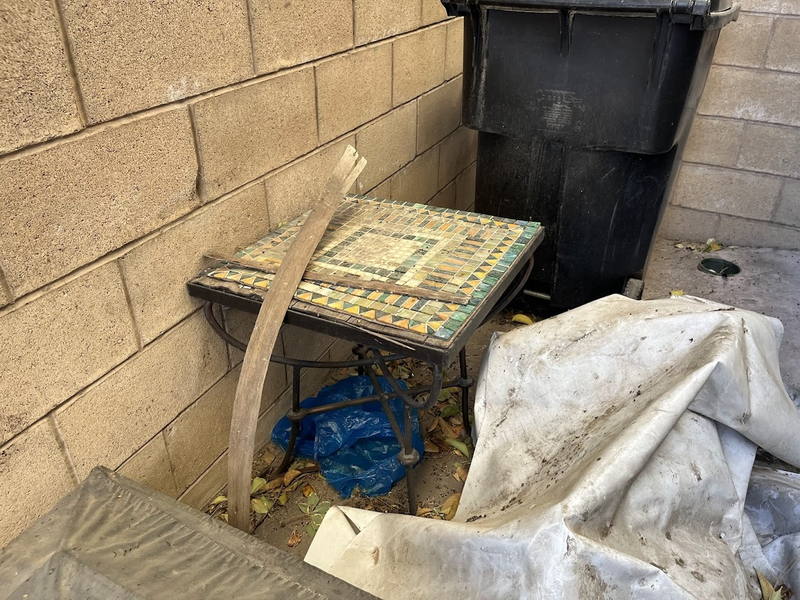
A mosaic-topped patio side table, a torn tarp and bagged waste tucked into the corner of a block-wall side yard beside a wheeled trash bin on a Los Angeles County pickup
The awkward corner nobody wants to clear out
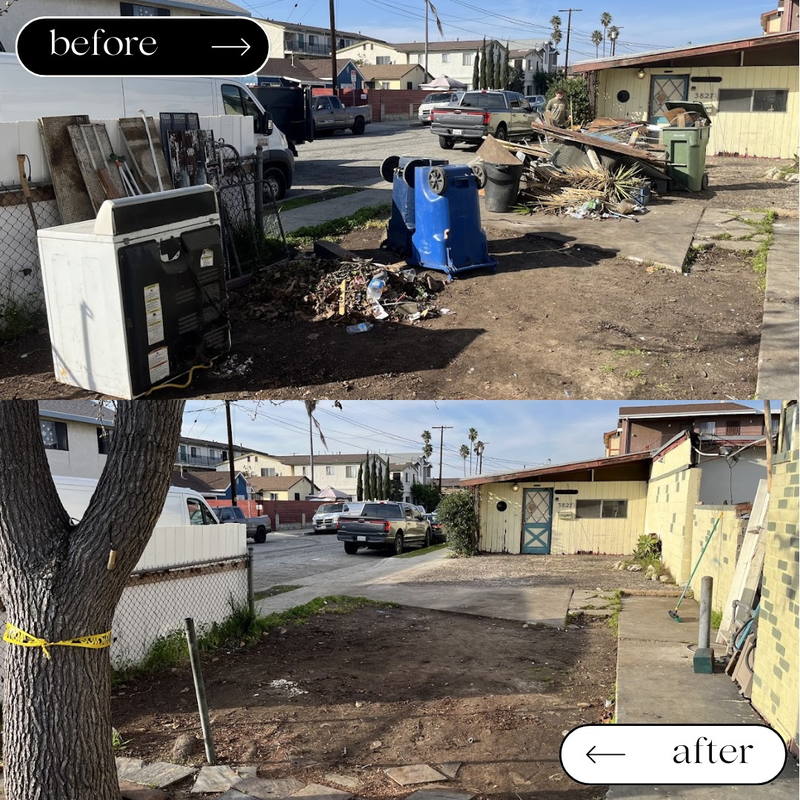
Before and after of a Los Angeles County front yard: a dumped washer and dryer, overflowing bins, cut palm fronds and scattered trash, then the same yard raked flat and completely clear
Before and after — a dumped front yard cleared
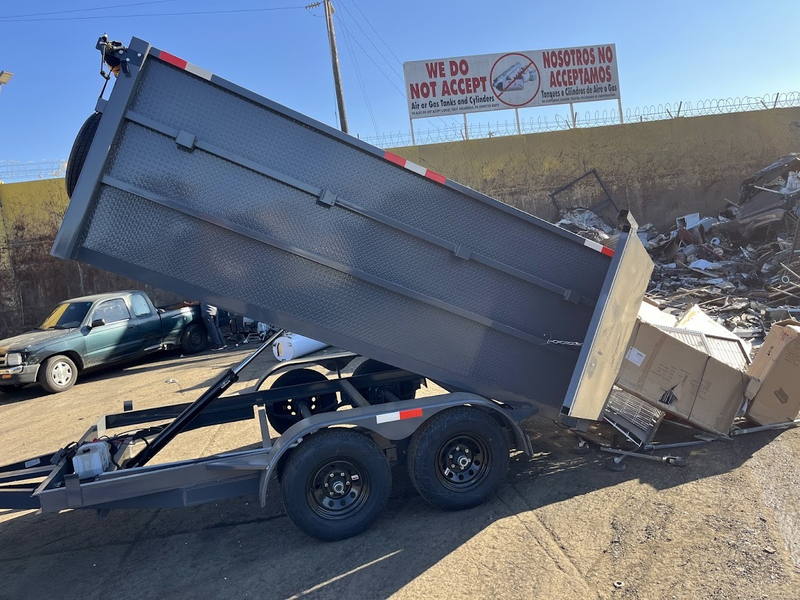
Our empty dump trailer tipped up beside a scrap pile at a Los Angeles County transfer station, under the yard sign refusing air and gas cylinders
Emptied out at the transfer station

Our own crews on Los Angeles County jobs. Side yards, narrow walkways and the back of the property is where most of the work actually happens.

What the zip test actually returns

Both famous names stopped sending a truck

The two organizations almost everyone reaches for first are the Salvation Army and Goodwill. Neither of them will come to your door for a couch in Los Angeles County any more, and both now hand the job to the same paid company. If you are planning a Saturday around a free charity pickup, this is the paragraph that saves it.

We did not take anyone’s word for this. We typed twelve Los Angeles County zip codes into the Salvation Army’s own “Schedule a Pickup” box on satruck.org and recorded where each one landed. All twelve ended on a local rehabilitation center page carrying one sentence: “While The Salvation Army no longer offers home pickups in this area, consider our official partner, veteran-owned ReSupply’s fee-based priority pickup service (24-48 hours), where items are delivered directly to The Salvation Army.” The heading above it reads “Fee-based Partner pickup service.”

Where the Salvation Army’s own pickup scheduler sends a Los Angeles address
Salvation Army centerZip codes that routed to itWhat that center’s own page saysWhere it sends you instead
Santa Monica90026, 90045, 90066, 90210, 90232, 90401“no longer offers home pickups in this area”ReSupply, “fee-based priority pickup service (24-48 hours)”
Long Beach90001, 90802The identical noticeReSupply, same wording
Pasadena91101The identical noticeReSupply, same wording
Canoga Park91303, 91403The identical noticeReSupply, same wording

Method: each zip code was entered in the Salvation Army’s own “Schedule a Pickup” box on satruck.org and the page it landed on was recorded. Twelve of twelve Los Angeles County and Antelope Valley zip codes ended on one of these center pages, all carrying the same sentence. Read October 30, 2026. Sources: Salvation Army adult rehabilitation centers, Long Beach, Pasadena and Canoga Park.

Goodwill has arrived at the same place by a different road. Goodwill Southern California’s own donation FAQ answers the question “Do you pick up donations?” like this: “Goodwill SoCal has partnered with Re Supply, a veteran-founded priority donation pick-up service. Items are picked up, for a fee, and delivered to Goodwill Southern California donation centers.” So both referrals point at ReSupply, one company, charging for the collection, with the donation going on to the charity afterwards. That is a legitimate service and it is not a free charity pickup, which is what people think they are calling about.

What that leaves, if free collection is the point, is the two organizations in the table above this one: Out of the Closet for a sofa plus enough other items to reach its minimum, and St. Vincent de Paul of Los Angeles for a ground-floor sofa on its own. Those are the only free in-home furniture collections in this county we were able to verify on the organization’s own page.

One more trap, for a fold-out. People reason that a sofa bed contains a mattress, and mattresses have a free statewide recycling program, so the sofa bed must be covered. It is not. the Mattress Recycling Council’s California accepted and unaccepted list names “Sofa beds” outright among the items that “do not qualify for no-cost drop-off or recycling”, and the same list rules out “Cushions (such as from chairs, couches or patio furniture)”. California’s $18.00 per unit recycling fee buys a mattress and a box spring free disposal, and in California a futon mattress that separates from its frame, and nothing else on your couch. Stripping the cushions off and driving them to a mattress site does not work either.

The test at the door

Why a good sofa gets turned down

Charities publish their condition rules and almost nobody reads them before loading a van. Habitat for Humanity ReStore takes upholstery only with “no stains, wear, tear, discolorations, pet hair, or patterns”. Read that honestly against your own couch in daylight: patterns are on the list, which surprises people, and pet hair is on it, which rules out a great many Los Angeles sofas by itself. St. Vincent de Paul adds the practical one, refusing anything that needs more than two people to move, which is where a large sectional stops being a donation.

There is also a label nobody checks. Under Business and Professions Code 19094 upholstered furniture made for sale in California carries a law label and the Bureau of Household Goods and Services publishes what has to be on it. It matters for one practical reason: a resale shop uses it to confirm what the piece is filled with and when it was made, so a couch with the label cut off is harder to place. Look under the seat deck before you photograph it.

If the sofa fails, stop there rather than driving it over hoping. A refused piece of furniture occupies a loading dock and a volunteer's afternoon and you still have to take it away again. The honest signals: any smell, any water damage, any sagging that does not come back, any tear in the fabric under the cushions, and anything that has spent a night outdoors. Those mean disposal, and the next two sections are for you.

Sources: Business and Professions Code 19094 as published by the Legislative Counsel, Bureau of Household Goods and Services on official law label requirements, and the condition rules published by Habitat for Humanity ReStore and St. Vincent de Paul of Los Angeles. Read October 29, 2026.

Doing it yourself

Driving it to a gate, and the one-ton minimum

If you have a truck and an afternoon, this is the fastest route in the county, and the expensive surprise in it is arithmetic rather than policy. Gates price by the ton and almost all of them put a one-ton minimum under the charge, so a two-hundred-pound sofa arrives as a tenth of a ton and is billed as a full one. Most operators also run a separate and higher rate for what they call hard-to-handle or bulky items, which is the category furniture lands in.

Public self-haul gates in Los Angeles County that will take a sofa
SiteWho may use itOpen to the publicWhat the operator chargesWorth knowing before you drive
Central LA Recycling and Transfer StationLA Sanitation · 2201 E Washington Blvd, Los AngelesCity of Los Angeles residentsWeekdays 4:00am to 5:00pm, Saturday 6:00am to 2:30pm$103.00 a ton for standard trash and $113.00 a ton for hard-to-handle bulky items, each with a one-ton minimumBring your own hard hat and high-visibility vest. Appliances and scrap metal are prohibited, so strip a sleeper mechanism out first and take it to a scrap yard
Puente Hills MRFLA County Sanitation Districts · 13130 Crossroads Pkwy S, City of IndustryOpen to the public, no residency rule publishedMonday to Saturday 4:00am to 5:00pm$112.44 a ton for municipal solid waste and $127.44 a ton for hard-to-handle bulky items, one-ton minimum, rates effective July 15, 2026A vest is required whenever you are out of the vehicle and costs $4.50 at the scale house. No checks. Self-haul loads must contain an acceptable share of recyclable material, so staff may redirect a single-item load
South Gate Transfer StationLA County Sanitation Districts · 9530 Garfield Ave, South GateOpen to the public, no residency rule publishedMonday to Saturday 6:00am to 5:00pm$123.12 a ton for municipal solid waste and $138.12 a ton for hard-to-handle bulky items, one-ton minimum, rates effective July 15, 2026Hand-unloaded vehicles are not admitted after 4:30pm and all unloading must finish by 4:50pm, with no exemptions. Bringing waste the site cannot accept draws a charge of at least $500
Scholl Canyon LandfillLA County Sanitation Districts · 7721 N Figueroa St, GlendaleRestricted wasteshed: Glendale, La Cañada Flintridge, Pasadena, South Pasadena, San Marino, Sierra Madre and named unincorporated areas onlyWeekdays 8:00am to 5:00pm, Saturday 8:00am to 3:30pm$85.91 a ton for municipal solid waste and $100.91 a ton for hard-to-handle bulky items, one-ton minimum, rates effective July 15, 2026The cheapest gate in the set and the one most people are not allowed to use. A Monterey Park or Alhambra sofa is outside the wasteshed and will be turned away
Savage Canyon LandfillCity of Whittier · 13919 Penn St, WhittierCity of Whittier residents and businesses only, no exceptions, with proof of residencyMonday to Saturday 7:30am to 3:00pm, no entry after 2:45pm$64.55 a ton for trash under rates effective July 14, 2026. Whittier residents showing ID pay $20 for one Saturday dump up to a three-quarter ton pickup, and a $42 discounted disposal permit is sold at City HallThe city rates a couch as trash rather than as a bulky item, because it defines hard-to-handle as material needing extra landfilling work such as concrete and stumps. May close to the public on rainy days
EDCO Recycling and TransferEDCO Disposal · 2755 California Ave, Signal HillOpen to the publicMonday to Saturday 6:00am to 4:30pm, Sunday 9:00am to 1:30pmNo gate rate published. EDCO states only that self-hauled disposal is accepted at a reasonable cost, so call before you loadThe only public gate in the set open on a Sunday, and the one the City of Lakewood points apartment and condo residents to for bulky items
DART, DowneyAthens Services · 9770 Washburn Rd, DowneyOpen to the publicWeekdays 5:00am to 6:30pm, Saturday 6:00am to 1:30pmNo gate rate published. Athens names garage clean-up and furniture disposal among its public services but publishes no tipping feeThe longest public hours of any site here. The County Sanitation Districts stopped operating this facility in 2022, so older county rate sheets do not apply to it

Sources: Central LA Recycling and Transfer Station, Puente Hills MRF, South Gate Transfer Station, Scholl Canyon Landfill and the LA County Sanitation Districts tipping fees schedule, Savage Canyon Landfill, EDCO Recycling and Transfer and DART, Downey. Every rate is the one the operator publishes, read October 29, 2026. Gate fees are charged by the operator, not by us. Rates change: confirm at the scale house before you load.

Three things catch people out at the scale house, and all three are published rather than discretionary.

Residency and wasteshed rules. Central LA Recycling and Transfer Station is for City of Los Angeles residents. Scholl Canyon in Glendale operates a restricted wasteshed under a city ordinance, which limits it to waste generated in Glendale, La Cañada Flintridge, Pasadena, South Pasadena, San Marino, Sierra Madre and a defined set of unincorporated areas. Driving a Monterey Park sofa to Scholl Canyon is a wasted trip, and nothing on the way there tells you so.

Safety gear and payment. The county's sites require a high-visibility vest whenever you are out of the vehicle and sell one at the scale house. CLARTS wants a hard hat too. The scales take cash and cards but not checks, and there is a cap on unloading time.

Covering the load, which is the law. Vehicle Code 23115 requires that a vehicle carrying anything being transported for disposal or recycling not be driven on a highway unless the load is covered so no part of it can spill or fall. A sheet and two ratchet straps satisfies it; a sofa standing loose in an open bed does not, and it is an infraction. Operators enforce it as well: Sunshine Canyon Landfill publishes a per-load uncovered-load fee citing the same section.

Our landfills and transfer stations guide has the wider inventory of sites, hours and which ones accept the public at all.

The honest part

What actually happens to the couch

People ask us where a couch gets recycled, and the honest answer is that in Los Angeles County it mostly does not. That is worth stating plainly on a page about disposal, because three cities state it themselves and the rest simply do not say.

Culver City publishes the clearest version: “Any furniture collected will be landfilled,” and the same page asks residents to try a thrift store or a community group first for exactly that reason. Torrance says its large-item collections, other than electronics and metal appliances, “are sent to the landfill and NOT recycled.” Whittier says most bulky items are sent to landfill and not recycled. Three cities out of forty-three volunteering the same fact is not three outliers; it is three cities being straight about what the whole county does with a sofa.

The reason is structural and it is worth understanding, because it explains why a mattress is different. A mattress has a producer-funded recovery program behind it: a recycling charge is collected at the register under California's used mattress law, and that money pays collection sites to take old mattresses back and pull them apart for steel, foam and timber. That is why there is a map of free mattress drop-off points in this county and why our mattress guide can list them with addresses and caps. There is no equivalent program for upholstered furniture. No fee is collected on a couch, so nobody is paid to dismantle one, so nobody does it at volume.

A sofa is also genuinely awkward to recycle. Frame timber, steel springs, often a steel sleeper mechanism, polyurethane foam and fabric over a few hundred staples. Every one of those materials has a market alone and none of them has a market while they are stapled together, and pulling one apart is twenty minutes of hand labor for a few dollars of scrap.

So what can you actually do about it, in descending order of effect.

Keep it in use. Donation or resale is the only route that genuinely avoids landfill, which is why the condition test above is worth taking seriously rather than hoping.

Pull the steel out. The springs and a sleeper mechanism are scrap steel and a scrap yard will take them. This is also the one bit of disassembly with a clear destination, and it matters at the gate too: CLARTS prohibits scrap metal, so a sleeper sofa taken there should have had its mechanism removed first.

Ask, and get a real answer. If this matters to you, ask your city where its bulky furniture goes, and ask any crew you hire the same question. We sort loads by hand and the frame timber and the steel come out where they can. We are not going to claim a sofa gets recycled, because for the most part it does not, and a company that tells you otherwise is selling you something.

Sources: the three cities quoted publish these statements on their own bulky-item pages, linked in the city-by-city directory — Culver City, Torrance and Whittier. Read October 29, 2026.
The route that costs the most

Putting it out unbooked is a criminal offense

Every bulky-item program in this county is a booked collection. A sofa on the parkway with no work order behind it is not an early pickup, it is illegally dumped waste, and the law treats it as such whether or not anybody comes to look.

California Penal Code 374.3 makes it unlawful to dump waste matter on a public or private road, on private property without the owner's consent, or in a public park. Two details matter for furniture. The fines are mandatory rather than discretionary, and each day the waste remains is a separate violation, so a sofa left out over a long weekend is four counts. And the commercial-quantities tier, a misdemeanor rather than an infraction, starts at one cubic yard. A three-seat sofa is roughly that.

The statute also reaches anyone who dumps “or causes to be dumped”. That phrase is the whole argument for checking who you hand a sofa to. If an unlicensed truck takes your couch for cash and leaves it under the 10 three blocks away, the address on the paperwork inside it is yours, and the exposure does not transfer with the furniture. Our guide to vetting a hauler is about exactly this, and our illegal dumping guide covers reporting a sofa somebody else left.

If a couch is already on your street and is not yours, do not add to it. In the City of Los Angeles report it through MyLA311 or on 800-773-2489, the same number you would use to book your own pickup. In unincorporated county areas illegal dumping has its own line, 1-888-838-6746. Reported, it goes on a route; left alone, a dumped sofa attracts more dumping within days, which is the mechanism behind every heap of furniture you have driven past.

The statuteCalifornia Penal Code 374.3. An infraction, and each day the waste remains in place is a separate violation
First, second, third convictionA mandatory fine of $250 to $1,000, then $500 to $1,500, then $750 to $3,000, with the court able to order removal or its cost and at least 12 hours of litter abatement
Commercial quantitiesWaste from a trade or business, or one cubic yard or more: a misdemeanor, up to six months in jail plus a mandatory fine from $1,000
The City of Los Angeles layerLAMC 66.25 bars depositing solid waste of any kind on a street, with administrative fines of $500 for a first violation, $750 for a second and $1,000 for a third and each one after it, and it makes you liable for the city's cleanup cost plus a 40 percent administration surcharge
The cheaper city sectionLAMC 56.08 catches waste left on a sidewalk or parkway, at $50, then $100, then $150, before it becomes a misdemeanor
Unincorporated countyCounty Code Title 20, Section 72 sets the set-out window, and waste out before 5:00pm the day before collection is out of compliance

Sources: California Penal Code 374.3 as published by the Legislative Counsel, LAMC 66.25 and LAMC 56.08 as published in the Los Angeles Municipal Code, Los Angeles City Controller, Piling Up, and County Public Works, CleanLA. Read October 29, 2026.

Pick a route

Which route fits your week

Four routes, and the only question that decides between them is what you are actually short of: money, time, or the ability to carry a sofa down a staircase. Read down the first column until you find your sentence.

Matching the route to the situation, not to the sofa
Your situationThe route that fitsWhy
The sofa is already at the curb or in the alley and I am in no hurryYour city's bulky-item programFree in nearly every city in the county. The cap is annual, so using one of two is still worth more than paying.
I have a week, and the sofa is on the ground floorYour city's bulky-item programA week covers the notice period in all but a handful of cities. Book it, get the confirmation, put it out the night before.
It is a sectional, or a sleeper sofa, and I am on my ownA crew, or two strong friends and a truckNo program in this county sends anyone inside. A sleeper's steel frame puts a three-seater well past what one person moves safely.
Second or third floor, no elevatorA crewCurbside means curbside. The staircase is the job, and it is the part no free program covers.
Escrow closes Friday, or the lease ends SaturdayA crew, or self-haul todayTwo weeks' notice in Pasadena or Culver City is not a deadline you can negotiate with. The gate is open today.
Five-unit building or largerThe building's hauler, through the managerThe free residential program does not apply to you. Your collection is the building's commercial contract.
The sofa is clean, structurally sound and under about ten years oldDonation, and ask for collectionA charity that resells will send a truck for free for something it can put on the floor. Nothing on this page beats that.
It is wet, torn, smoke-damaged or has been outsideDisposal, not donationEvery charity refuses it, and arriving with it wastes a pickup slot somebody else needed.
I have a pickup truck and a free afternoonSelf-haul to a transfer stationYou pay the gate fee the operator charges and nothing else. Tarp the load before you pull out.
Thirty items, not oneA crew, or a dumpsterItem caps run from one to twenty. A whole-garage volume is not what these programs are for.

The caps, notice periods and eligibility rules behind this table are the ones in the city-by-city directory, each linked to the city or hauler that publishes it. The routes themselves are our own judgment from doing the work in Los Angeles.

Being straight about it

When paying a crew is actually the right call

We are a junk removal company that has just spent an entire page telling you how not to need one. That is deliberate, and it is worth saying plainly where the free routes stop working, because no city page will say it for you.

Every free program in this county is curbside. Not one of the programs in the city-by-city directory publishes an in-home, carry-out or back-of-property option for furniture. The crew arrives, picks up what is on the parkway and leaves. If the sofa is in a second-floor apartment in Koreatown, the free service solves the last ten feet of your problem and none of the rest of it.

They run on the city's clock, and the caps are low. One business day in the City of Los Angeles is genuinely fast. Two weeks in Pasadena and Culver City is not, and a year of waiting in Torrance once you have used your single annual pickup is not a plan at all. The item caps compound it: three in Manhattan Beach and Whittier, four in Glendale and Agoura Hills, five in Santa Monica and Downey. A sofa, a loveseat, a coffee table and a mattress is already over the line in half the county, and a garage is forty items.

It assumes you can do the lifting. Free is free in the same way a gym membership is free: only if you can do the work. If you are eighty, or recovering from surgery, or on your own with a sleeper sofa and a flight of stairs, the gap between the living room and the parkway is the entire job. Ask your city whether it offers any assisted or back-of-property collection before you assume it does not, because some haulers will accommodate a documented need even where it is not published. If the answer is no, that gap is exactly what a crew is for.

If none of that applies to you, use your city. Genuinely. Our number is on every page of this site and it will still be there in two weeks when your free pickup has already been and gone.

Worth knowing

The parts people get wrong

What to know
  1. In the City of Los Angeles, curbside collection of a couch is free with no annual cap, booked at least one business day before your regular trash day on 1-800-773-2489.
  2. No curbside bulky-item program anywhere in Los Angeles County will come inside a home for furniture. Every one of them is a curbside collection and the carry-out is yours.
  3. Transfer stations in Los Angeles County charge by the ton with a one-ton minimum, so a two-hundred-pound sofa is billed as a full ton of waste.
  4. Culver City, Torrance and Whittier each state on their own pages that the bulky furniture they collect is landfilled rather than recycled.
  5. Leaving a couch at the curb with no booked collection is illegal dumping under California Penal Code 374.3, where the fine is mandatory and each day it remains in place is a separate violation.
  6. Neither the Salvation Army nor Goodwill will send its own truck for a sofa anywhere in Los Angeles County. Both now refer collections to a fee-based partner, and the two genuinely free in-home pickups we could verify are Out of the Closet and St. Vincent de Paul of Los Angeles.
Where this comes from

Sources

Every rule, fee, limit and deadline on this page is from the body that sets it. Checked on the date above; if a city changes its program we change the page.

  1. LA Sanitation and Environment, Schedule a Bulky Item PickupThe City of Los Angeles program: free, unlimited, one business day's notice, what is accepted and refused, and the monthly free drop-off Saturdays.
  2. Los Angeles County Public Works, CleanLA trash collectionThat collection in unincorporated areas runs through franchise areas and garbage disposal districts, and the set-out window in County Code Title 20.
  3. LA County Sanitation Districts, tipping fees for solid wasteThe published per-ton gate rates, the hard-to-handle bulky category, the one-ton minimum and the uncovered-load surcharge.
  4. LA County Sanitation Districts, Puente Hills MRFPublic self-haul terms, hours, the safety-vest requirement and the recyclable-content condition on hand loads.
  5. LA County Sanitation Districts, South Gate Transfer StationPublic hours, the hand-unload cut-off times and the charge for bringing unacceptable waste.
  6. LA County Sanitation Districts, Scholl Canyon LandfillThe restricted wasteshed and which cities and unincorporated areas may use the gate.
  7. LASAN, Central LA Recycling and Transfer StationResidency, hours, the per-ton and hard-to-handle rates, the one-ton minimum and the ban on scrap metal and appliances.
  8. City of Whittier, Landfill ServicesSavage Canyon's resident-only rule, its published rates and the discounted Saturday and permit options.
  9. Sunshine Canyon Landfill, disposal costsA privately operated gate's per-ton rate, environmental fee and uncovered-load charge.
  10. California Penal Code 374.3, Legislative CounselThe mandatory fine tiers for dumping waste, the separate-violation-per-day rule and the one-cubic-yard commercial threshold.
  11. California Vehicle Code 23115, Legislative CounselThe requirement to cover a load being transported for disposal or recycling.
  12. California Business and Professions Code 19094, Legislative CounselThe law-label requirement on upholstered furniture made for sale in California.
  13. Bureau of Household Goods and Services, law label requirementsWhat the official law label on upholstered furniture has to carry.
  14. Los Angeles Municipal Code 66.25, depositing solid waste on streetsThe City of Los Angeles administrative fine tiers for illegal dumping and the liability for cleanup cost plus a 40 percent surcharge.
  15. Los Angeles Municipal Code 56.08, waste on sidewalks and parkwaysThe lower fine tiers for waste left on a sidewalk or parkway before the offense becomes a misdemeanor.
  16. Los Angeles City Controller, Piling UpLAMC 66.25, the citation fine tiers and LA Sanitation's role as the designated investigating authority.
  17. Out of the Closet, donationsFree collection, that drivers enter the home and carry about one flight, and the two-item or ten-bag minimum.
  18. St. Vincent de Paul of Los Angeles, donation of goodsThat sofas and recliners are accepted, collection is free, and the limit is three or four steps with no staircases.
  19. Habitat for Humanity ReStore Los Angeles, donate itemsThe upholstery condition rule and the ground-floor pickup fee.
  20. Salvation Army, Santa Monica adult rehabilitation centerThat home pickups are no longer offered in this area, and the referral to ReSupply's fee-based priority pickup.
  21. Salvation Army, Long Beach adult rehabilitation centerThe same no-home-pickup notice for the zip codes that route here.
  22. Salvation Army, Pasadena adult rehabilitation centerThe same no-home-pickup notice for the zip codes that route here.
  23. Salvation Army, Canoga Park adult rehabilitation centerThe same no-home-pickup notice for the zip codes that route here.
  24. Goodwill Southern California, donation FAQThat donation pickups are handled by ReSupply and that items are picked up for a fee.
  25. Mattress Recycling Council, accepted and unaccepted items in CaliforniaThat sofa beds and couch cushions do not qualify for no-cost mattress drop-off, and what does.

If you would rather not do it yourself

Same crew, one visit, one number agreed before anything is lifted.

Related guides

The rest of the LA disposal manual.

Couch disposal, answered

The follow-up questions people ask after this one, in the phrasing they ask them in.

Where can I dispose of a couch in Los Angeles County for free?

Start with your own city's bulky-item program. Forty-two of the forty-three programs in the city-by-city directory have a free route for a sofa, and in the City of Los Angeles there is no annual limit on how often you use it. The exception is Hidden Hills, where the routine on-call pickup is charged and the free route is one citywide event a year. Palos Verdes Estates is free but runs on two collection days a year and nothing in between.

How much does it cost to take a couch to the dump in Los Angeles?

You pay the operator's gate rate, and the catch is the one-ton minimum almost all of them apply, so a single sofa is charged as a full ton. The county's own published rates run from $85.91 a ton at Scholl Canyon to $123.12 at South Gate, with a higher hard-to-handle rate at each. Whittier residents get a $20 Saturday rate at the city's own landfill. All of those are the operator's charges, not ours.

Who will pick up a used couch for donation in Los Angeles?

Out of the Closet collects free and its drivers will come inside and carry roughly one flight, but it needs two large items or about ten bags to send a truck. St. Vincent de Paul of Los Angeles names sofas and recliners, collects free, and will manage three or four steps at most. Habitat for Humanity ReStore collects for a published fee, ground floor only. The Salvation Army no longer offers home pickups anywhere we tested in Los Angeles County, and Goodwill Southern California refers pickups to a paid partner, ReSupply.

Will the Salvation Army or Goodwill pick up a couch in Los Angeles?

No, not for free, and not with their own truck. Every Los Angeles County zip code we entered in the Salvation Army's own pickup scheduler landed on a center page reading “While The Salvation Army no longer offers home pickups in this area, consider our official partner, veteran-owned ReSupply's fee-based priority pickup service (24-48 hours)”. Goodwill Southern California's FAQ says it has partnered with the same company and that items are “picked up, for a fee”. Both are paid collections. For a genuinely free in-home pickup the two we could verify are Out of the Closet and St. Vincent de Paul of Los Angeles.

Can I take a sofa bed mattress to a free mattress recycling site?

No. The Mattress Recycling Council's California list names “Sofa beds” among the items that do not qualify for no-cost drop-off or recycling, and it also excludes “Cushions (such as from chairs, couches or patio furniture)”. The $18.00 per unit fee paid at purchase covers a mattress, a box spring, and in California a futon mattress that separates from its frame. A fold-out sofa is a bulky item, not a mattress, so it goes through your city's bulky collection or a hauler.

Is a couch recyclable?

In practice, in Los Angeles County, no. There is no producer-funded recovery program for upholstered furniture the way there is for mattresses, so nothing pays anyone to dismantle a sofa at scale. Culver City, Torrance and Whittier all state on their own pages that the bulky furniture they collect is landfilled. Keeping it in use through donation or resale is the only route that genuinely avoids that.

What is the fine for leaving a couch on the sidewalk in Los Angeles?

California Penal Code 374.3 sets a mandatory fine of $250 to $1,000 for a first conviction, $500 to $1,500 for a second and $750 to $3,000 for a third, and each day the item remains in place is a separate violation. One cubic yard or more, which a three-seat sofa roughly is, moves it to a misdemeanor. In the City of Los Angeles, LAMC 66.25 adds citation fines of $250 to $1,000.

Can I cut up a couch and put it in my black bin?

In small amounts, in the City of Los Angeles, within reason. The LASAN black bin takes household trash, worn-out fabric unsuitable for donation and small treated wood, and the same page says oversized furniture belongs on a free bulky pickup instead. So it works as a drip across several collection days for someone in a studio with no vehicle, not as a way to dispose of a whole sofa in one week.

Do I have to cover a couch in the back of a pickup truck in California?

Yes. Vehicle Code 23115 requires that a vehicle carrying anything being transported for disposal or recycling not be driven on a highway unless the load is covered so that no part of it can spill or fall. A sofa under a sheet with two ratchet straps satisfies it; a sofa standing loose in an open bed does not, and it is an infraction. Landfill operators also charge their own uncovered-load surcharge.

Who picks up a couch the same day in Los Angeles?

No city program does. Fastest published municipal turnaround is one business day in the City of Los Angeles and Burbank, and Pasadena and Culver City run about two weeks. Same-day means either self-hauling it to a gate yourself or hiring a crew. If your deadline is today, our same-day service covers the Los Angeles area and the quote is free and given before anything is lifted.

The proof

What our customers say

5.0from 70 reviews on Google

Word for word from Google. Nothing tidied.

  • 6 months ago

    We needed a last min mattress removal and called these guys up and hunter came by to pick up the mattress and haul it away for a fair price and had great communication. Very friendly and quick. Callem up for any junk removal they got you 👍the rest is on Google

    Jose G MunozLocal Guide · 16 reviews · 6 photosLast-minute mattress removal
  • Fair pricing 11
  • Personable staff 10
  • Polite 5
  • Punctual staff 4
If you would rather not

Furniture removal
city by city

Free bulky collection, the item cap and whether anyone will come inside for it are set city by city. Each of these is written for that city rather than for Los Angeles in general, and the quote is free either way.

The full map is on areas we serve, and how the number is worked out is on how our pricing works.

Request a quote

Send a photo, get a flat number back. Free, no obligation, no pressure and no call-out fee — and if your city will haul it free instead, we will tell you that too. Most requests are answered within the hour during working hours.

Or call or text (323) 230-0777 — Mon–Sat around the clock, Sunday 1–10pm.

Call (323) 230-0777Text a photo