Mon–Sat open 24 hours · Sun 1–10pmFully insuredFamily-run, LA-based
team@lajunkhauling.com
Call us today(323) 230-0777
Home/Services/Construction debris removal/Hollywood

Construction debris removal in Hollywood
Your debris has one legal destination, and every load that misses it counts separately.

Demolition and remodel debris cleared from Hollywood houses, hillside lots, apartment conversions and storefront build-outs, taken to a City-certified processing facility, quoted free before we start.

Free quote, no obligation · one flat number before we start · you can also text that number

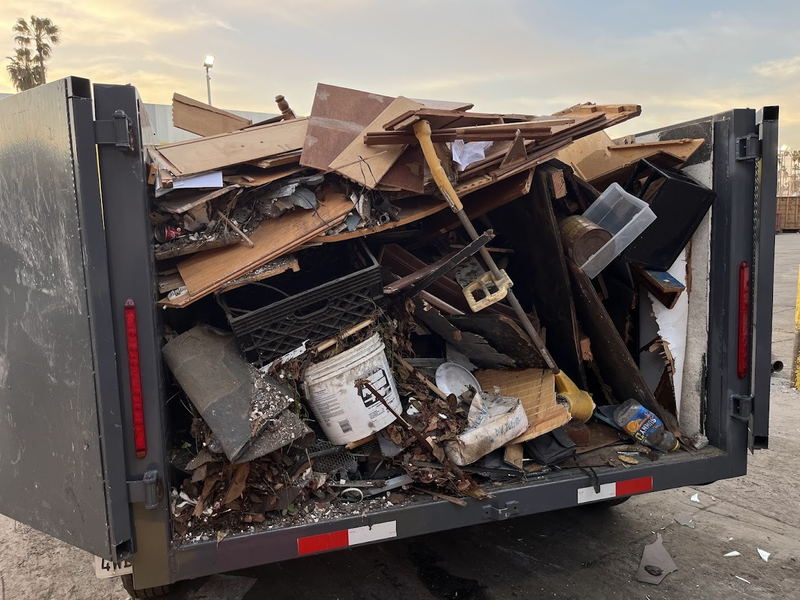
Our dump trailer loaded with mixed construction debris at dusk: cut timber, baseboard, a paint bucket, crates and broken fixtures stacked above the tailgate on a Los Angeles County job
Loading on a Los Angeles County job. In the City of Los Angeles the destination of the load is written into the law, not chosen at the gate.
In short

Hollywood sits inside the City of Los Angeles, so mixed construction and demolition debris generated here has one lawful destination: a City-certified processing facility, carried by a permitted hauler. Each load taken anywhere else is a separate violation, penalized up to $5,000. We haul to certified processors and bring back the tickets.

Hollywood is a neighborhood of the City of Los Angeles, not a city of its own, so the rule here is the citywide one. Council File 09-3029, Ordinance No. 181519, approved by the City Council on 5 March 2010, amended the municipal code to require that construction and demolition waste generated inside the city be taken to a City-certified construction and demolition waste processing facility. Anyone collecting, removing or transporting it needs an AB 939 Compliance Permit from LA Sanitation, and LADBS works with Sanitation so that building permit applicants name their permitted hauler or show a self-haul permit. The penalties are laid out as a ladder: $1,000 for a first violation, $2,000 for a second inside six months, $5,000 for a third, and delivery of each and every offending load counts as a separate violation.

The part of this that catches people is not the diversion percentage. It is that the ordinance attaches to the load and to the permit, so a contractor who takes the closest gate on a Friday afternoon has not saved anybody anything — the exposure lands on the project. LA Sanitation puts the same point in one line on its own program page: penalties of up to $5,000 for every load of C&D waste unlawfully processed.

What follows is the ordinance in plain terms, the two carve-outs that genuinely exist, the certified processor list and its published recovery rates, and the physical reality of clearing debris on Hollywood streets. The rest of what we take out of this neighborhood is on junk removal in Hollywood, and the service across the county is on construction debris removal.

The ordinance, in full

One legal destination
and a penalty that counts by the load.

Ordinance No. 181519 rewrote Los Angeles Municipal Code sections 66.32 through 66.32.5. Section 66.32.1 requires anyone who collects, removes or transports solid waste generated within the city, construction and demolition waste included, to hold an AB 939 Compliance Permit from the Bureau of Sanitation in addition to every other permit they need. It goes further than the truck: a person who arranges for the removal of C&D waste generated in the city and does not contract with a permittee to do it needs the permit themselves.

Subsection (b) of that section sets the destination. Every permittee who collects, removes or transports C&D waste within the city must deliver it to a Certified Construction and Demolition Waste Processing Facility. There is exactly one alternative written into the ordinance, and it is narrow: delivery elsewhere is lawful only if at least two certified facilities have refused to accept the waste and provided a rejection slip, and those slips must be kept for a minimum of three years from the date they were received. That is the whole of the escape hatch. It is not a paperwork formality you can produce afterwards.

Two carve-outs are real and worth knowing. The first is source-separated material. The transportation requirement does not apply to source-separated material generated from a project in the city and delivered to a recycling facility, or segregated for recycling on site — and the ordinance names clean wood, clean concrete and metals as examples, with the condition that each type of material be transferred in a separate container. Keeping streams apart is not just good practice here, it changes which rule applies to them. The second is the homeowner. The requirement does not apply to residence owners who generate C&D waste in the course of personally performing construction and demolition projects at their own residences and transport it in their own vehicles. Personally, at their own residence, in their own vehicle: all three conditions at once.

Section 66.32.1(c) is the recordkeeping. Every permit holder has to report disposal and diversion amounts on the Bureau's forms and maintain documentation, which the ordinance lists as invoices, weight tickets, rejection slips where issued, weight tickets from a destination other than a certified facility where issued, and documents identifying the project location, the quantity of C&D waste, solid waste, source-separated material and co-mingled recyclables, and the destination of each load. All of it is kept at least three years. Subsection (d) even requires bins used to collect this material to be clearly marked with the hauler's name and phone number, which is a quick way to sanity-check who is standing in your driveway.

Fees and penalties close it out. Permitted haulers pay an AB 939 compliance fee equal to ten percent of their annual gross receipts, payable quarterly within 30 days of the quarter's end, with a 2.5% charge per late quarter up to a total of ten percent. Section 66.32.3 then sets the administrative penalties for unlawful disposition of C&D waste: $1,000 for the first violation, $2,000 for a second within six months of the first, $5,000 for a third within six months of the second, and $5,000 for every violation after a $5,000 penalty has been imposed. Delivery of each and every load in violation is a separate violation. Hauling without a valid AB 939 Compliance Permit is a separate matter again and is a misdemeanor, punishable on conviction by a fine of up to $1,000 or up to six months in county jail or both, with each day treated as a new offense. LA Sanitation can also suspend or revoke a permit on 30 days' notice.

Finally, the list you are actually choosing from. LA Sanitation publishes the certified processors with their audited mixed C&D recycling rates, and the 2026 list runs from 70.00% at the bottom, held provisionally, to 89.96% at the top. That spread is roughly twenty points. Against a 65% CALGreen target on your permit, the facility a hauler picks is the difference between clearing comfortably and clearing by a hair, so it is a fair question to ask before the truck is loaded rather than after.

$5,000the top administrative penalty for failing to deliver construction and demolition waste to a City-certified processing facility
Every loaddelivery of each and every load in violation is a separate violation under the ordinance
Two refusalsthe only lawful route to an uncertified facility, and both rejection slips are kept three years

Source: City of Los Angeles Ordinance No. 181519, Los Angeles Municipal Code 66.32 to 66.32.5. Cited in full below.

Governing lawCitywide Construction and Demolition Waste Recycling Ordinance, Council File 09-3029, Ordinance No. 181519, approved 5 March 2010
Where mixed C&D must goA City-certified construction and demolition waste processing facility
Who may haul itA hauler holding an AB 939 Compliance Permit from LA Sanitation, in addition to all other required permits
Penalty ladder$1,000 first violation; $2,000 second within six months; $5,000 third within six months; $5,000 for each violation after that
How violations countDelivery of each and every load in violation is a separate violation
The only alternativeTwo certified facilities must refuse the load and issue rejection slips, kept a minimum of three years
Source-separated carve-outClean wood, clean concrete or metals kept separate and delivered to a recycling facility, each material in its own container
Homeowner carve-outResidence owners personally doing the work at their own residence and hauling in their own vehicles
RecordsInvoices, weight tickets, rejection slips and the destination of each load, kept at least three years
BinsMust be clearly marked with the hauler's name and phone number
Certified processor rates, 2026Published audited mixed C&D recycling rates range from 70.00% provisional to 89.96%

Sources: City of Los Angeles, Ordinance No. 181519, Los Angeles Municipal Code Sections 66.32 to 66.32.5; LA Sanitation, Construction and Demolition Recycling Program and the 2026 certified processor list; LA Sanitation, Waste Hauler Compliance Program; CalRecycle, construction and demolition model ordinance guidance and the CALGreen 65% requirement.

Why Hollywood is hard to load

Hillside lots, converted flats
and streets with nowhere to stage anything.

Los Angeles City Planning's Hollywood Community Plan, updated in January 2025, covers Hollywood, Los Feliz, East Hollywood, Griffith Park and a set of hillside communities, and the overlays it lists are a fair map of the debris problem: the Hollywoodland Specific Plan over Beachwood Canyon, the Whitley Heights, Hollywood Grove, Spaulding Square and Sunset Square historic preservation overlay zones down in the flats, and the Mulholland Scenic Parkway Specific Plan along the ridge. Three different kinds of job, three different kinds of access.

The hillside lots are the slowest. Streets above Franklin narrow quickly, switch back, and lose their shoulders entirely. Driveways drop or climb at angles that a loaded dolly does not enjoy, many houses sit below the road on a stair rather than above it on a slab, and there is often no place at all to set material down between the house and the truck. Heavy demolition waste on a downhill carry is the single most dangerous part of this work, so we split heavy from light at the source, run smaller quantities per trip, and refuse to overload a vehicle that has to come back up a grade. On some addresses the honest answer is two shorter visits rather than one long one, and we say that while quoting.

The HPOZ blocks in the flats are the opposite problem: the streets are fine, and the constraint is the building. Spaulding Square and Sunset Square are tight bungalow blocks with narrow drives and detached rear garages; Whitley Heights is stepped, stair-access hillside stock with retaining walls and no frontage to speak of. Much of the corridor between Franklin and Santa Monica Boulevard is 1920s and 1930s multifamily that has been converted, subdivided and re-plumbed repeatedly, so a unit remodel means carrying debris down an interior stair, through a lobby and across a sidewalk to a truck that is already in somebody's way.

Then there is the clock. LADBS sets permitted construction and demolition hours in the City of Los Angeles at 7 a.m. to 9 p.m. Monday through Friday and 8 a.m. to 6 p.m. on Saturday, with no work permitted on Sunday, and failure to comply can be charged as a misdemeanor punishable by a fine of $1,000 and/or imprisonment. Tighter rules apply inside the Hillside Construction Regulation supplemental use districts, which limit work to 8 a.m. to 6 p.m. on weekdays and allow only interior work on Saturdays; those districts were established in 2017 and have since been extended by ordinance to areas including the Bird Streets and Laurel Canyon and, separately, Franklin Canyon, Coldwater Canyon and Bowmont Hazen. Whether a particular hillside address falls inside one is worth checking rather than assuming, and we check before we book a hillside slot.

The practical consequence for a Hollywood debris job is simple: you cannot stage a load here. There is no verge to pile material on, no legal curb to leave a heap against, and on most of these blocks a pile that sits overnight becomes somebody else's dumping ground by morning. Everything comes out in one motion, from the room to the truck. Commercial build-outs along the boulevards are the same job with a loading dock and a schedule attached, which is commercial junk removal in Hollywood, and when a unit turn mixes debris with furniture, furniture removal in Hollywood and mattress removal in Hollywood cover the rest of the load.

Sources: Los Angeles City Planning, Hollywood Community Plan; LADBS, permitted construction and demolition hours; LADBS, Hillside Construction Regulations.

Hollywood debris to a City-certified processor, with the paperwork. Free upfront quote.

Free upfront quote, no obligation. One number, agreed before anything is lifted.

5.0 from 67 reviews on GoogleMon–Sat, open 24 hours

On the job
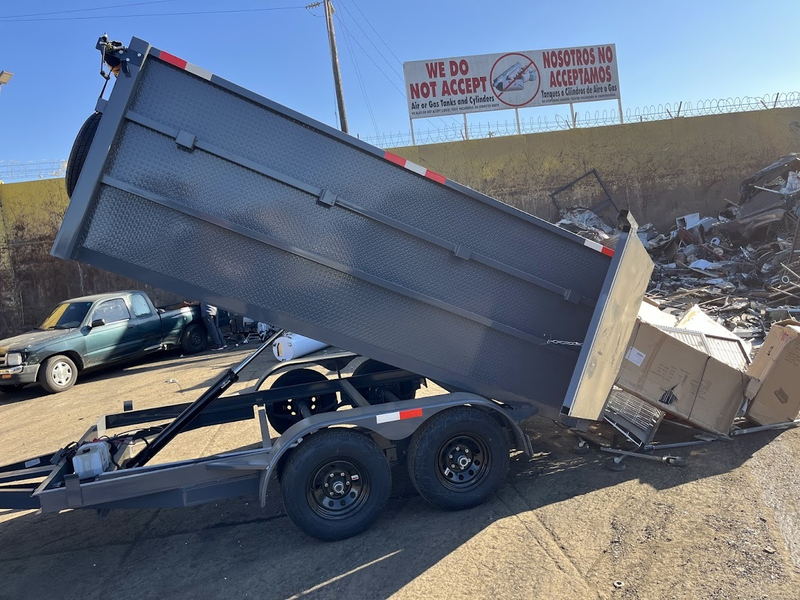
Our empty dump trailer tipped up beside a scrap pile at a Los Angeles County transfer station, under the yard sign refusing air and gas cylinders
Emptied out at the transfer station · Hollywood
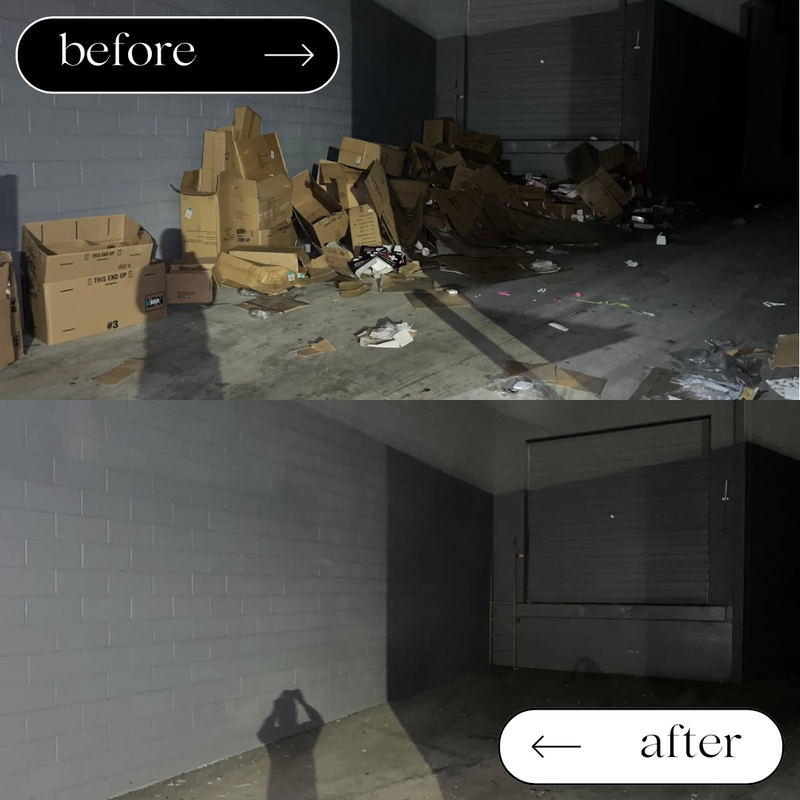
Before and after of a Los Angeles County commercial unit: the floor buried in collapsed cardboard cartons and loose litter, then the same unit completely empty with the roller door clear and the concrete swept
Before and after — a commercial unit cleared and swept · Hollywood
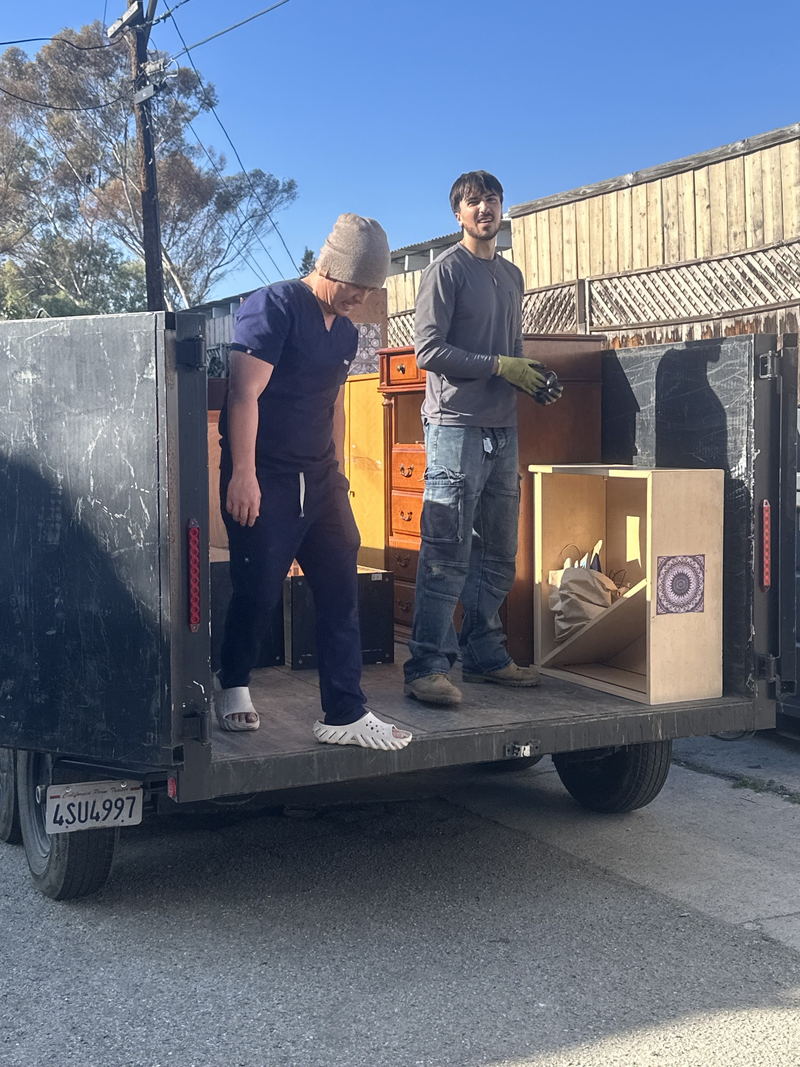
Two of our crew standing on the deck of the dump trailer on a Los Angeles County job, working a timber chest of drawers and a cabinet into place by hand
Our own crew, loading by hand · Hollywood

Our own crews on Los Angeles County jobs. The construction debris removal we run in Hollywood looks like this too: side yards, narrow walkways and the back of the property is where the work actually is.

Where the load ends up

A certified gate, an audited rate
and the three things we will not carry.

LA Sanitation names the materials its certified processors handle: concrete, asphalt, brick, dirt and mixed inerts; wood waste; gypsum and wallboard; and scrap metal. Those are the recoverable streams, and how they arrive decides what happens to them. Clean concrete and brick crushed for base is a genuinely circular outcome. Clean untreated lumber has a market. Copper, cast iron, steel stud and aluminum window frame are worth pulling out of the load before it ever reaches a gate. Gypsum board is processed separately. Mixed C&D is what is left after the others have been taken out, and it is the stream with the lowest recovery, which is why the ordinance's source-separation carve-out is useful rather than academic: each material in its own container, delivered to a recycling facility, is treated differently from a single mixed skipload.

The published numbers make the point. LA Sanitation lists every certified processor with an audited mixed C&D recycling rate for 2026, and those rates run from 70.00% at the low end to 89.96% at the high end, with an interactive map of the facilities updated in January 2026. The statewide floor beneath all of it is CALGreen, which requires locally permitted construction and demolition projects to recycle or salvage for reuse a minimum 65% of nonhazardous C&D debris; CalRecycle's guidance is that jurisdictions implement CALGreen or their own ordinance, whichever is more stringent. In the City of Los Angeles the local layer is not a higher percentage, it is a compulsory destination with money attached.

Three things never belong in a debris load, and the correct answer to each is a licensed specialist rather than a hauler.

Asbestos-containing material. South Coast AQMD Rule 1403 requires an asbestos survey report signed by an asbestos consultant before any demolition or renovation activity, with the only exception being renovation of a residential single unit dwelling where less than 100 square feet of intact material is removed. Notification to the district is required electronically 10 working days ahead of demolition or before removing more than 100 square feet of intact material containing more than 1% asbestos, and California Health and Safety Code 19827.5 prevents a city from issuing a demolition permit until it has a copy of that notification. Only contractors on the Cal/OSHA asbestos registration may perform the removal, and registration is mandatory for work on 100 square feet or more of material above 0.1% asbestos. In Hollywood's pre-1980 stock the usual finds are acoustic ceiling texture, resilient floor tile and its mastic, pipe lagging, duct wrap and roofing felt. Test first.

Lead paint debris. The US EPA's Renovation, Repair and Painting Rule requires any firm paid to disturb painted surfaces in homes, childcare facilities and preschools built before 1978 to be certified and to use lead-safe work practices. Most of the housing stock either side of Franklin Avenue predates that by a generation or more.

Treated wood waste. Under California Health and Safety Code Article 11.2, added by AB 332 in 2021, treated wood waste managed under the alternative management standards may not be burned, scavenged, chipped for mulch, stored in contact with the ground, recycled other than by reuse on the site where it was generated, or commingled with other waste before disposal once segregated. Disposal has to be at a treated wood waste approved landfill, meaning a class I hazardous waste landfill or a composite-lined portion of a solid waste landfill unit. Hillside Hollywood produces a lot of it: deck framing, stair stringers, retaining timbers and fence posts. It never goes in the clean wood stream.

Sources: LA Sanitation, Construction and Demolition Recycling Program and the 2026 certified processor list; City of Los Angeles, Ordinance No. 181519, Los Angeles Municipal Code Sections 66.32 to 66.32.5; CalRecycle, construction and demolition model ordinance guidance and the CALGreen 65% requirement; CalRecycle, construction and demolition debris recycling; South Coast AQMD, Rule 1403, asbestos emissions from demolition and renovation; South Coast AQMD, Rule 1403 frequently asked questions; Cal/OSHA, asbestos contractor registration and certification; US EPA, Lead Renovation, Repair and Painting Program; California Health and Safety Code, Article 11.2, treated wood waste (AB 332).

The rule behind it
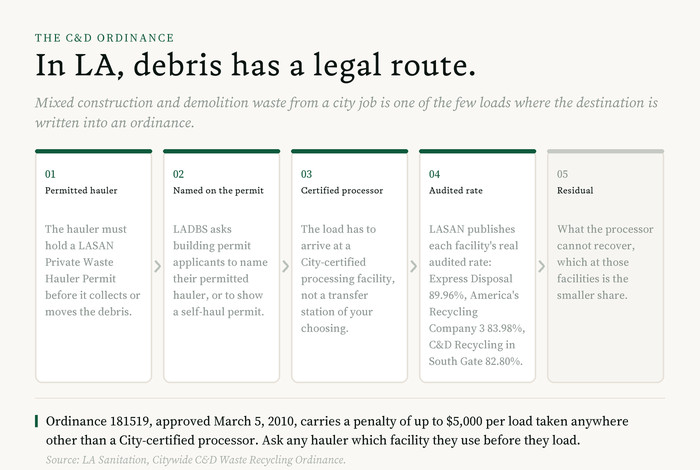
Diagram of the Los Angeles construction and demolition ordinance route: a LASAN-permitted hauler named on the building permit takes mixed debris to a City-certified processor with a published audited recycling rate
The route the C&D ordinance actually requires

Same rule in Hollywood as anywhere else in Los Angeles County. The local part is the program above, not the disposal law. Full detail on construction debris removal.

Worth knowing

Hollywood debris
in six lines.

Hollywood C&D facts
  1. Hollywood is part of the City of Los Angeles, so mixed construction and demolition waste generated there must be delivered to a City-certified processing facility under Ordinance No. 181519.
  2. The administrative penalty ladder for failing to deliver C&D waste to a certified facility runs $1,000, then $2,000, then $5,000, and delivery of each and every offending load is a separate violation.
  3. The only lawful alternative destination is one where at least two certified facilities have refused the load and issued rejection slips, which must be kept for at least three years.
  4. Source-separated clean wood, clean concrete and metals are exempt from the certified-facility requirement when each material is transferred in a separate container to a recycling facility.
  5. Anyone collecting, removing or transporting construction and demolition waste in the City of Los Angeles needs an AB 939 Compliance Permit from LA Sanitation.
  6. LA Sanitation's 2026 certified processor list publishes audited mixed C&D recycling rates ranging from 70.00% to 89.96%.

This page is construction debris removal in Hollywood specifically. The wider service is on construction debris removal across Los Angeles, and everything we haul in this city is on junk removal in Hollywood. Same crew, different job: Commercial junk removal in Hollywood, Furniture removal in Hollywood, Mattress removal in Hollywood, Same-day junk removal in Hollywood. Pricing works the same way everywhere: how our pricing works, and the full map is on areas we serve.

Service area
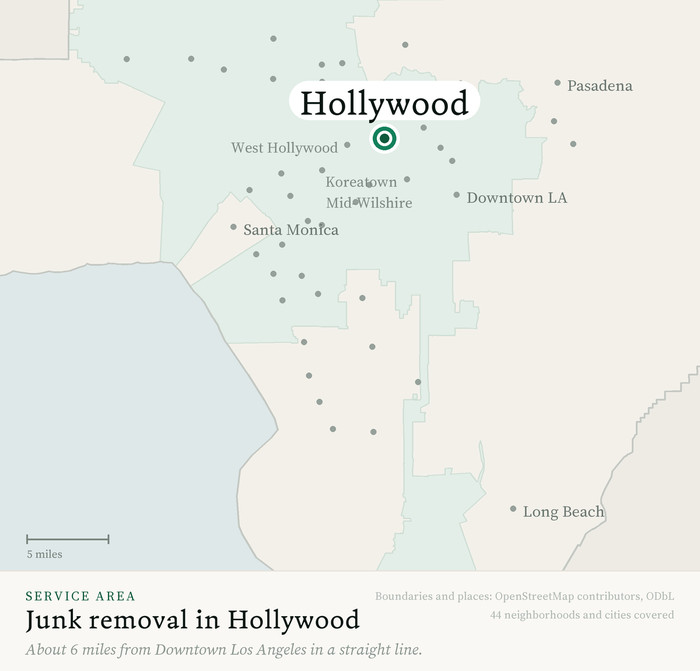
Map of our greater Los Angeles junk removal service area with Hollywood marked, about 6 miles from Downtown Los Angeles, drawn from OpenStreetMap boundary data
Hollywood in the greater Los Angeles service area. Boundaries and places from OpenStreetMap contributors, ODbL.

We are already next door most days. The whole list is on areas we serve.

What leaves with
a Hollywood tear-out

Separated at the property, hauled to a certified gate, documented for your permit file.

Hollywood construction
debris questions

Certified processors, the penalty per load, the carve-outs, and what cannot be hauled at all.

Where is my Hollywood construction debris legally allowed to go?

To a City-certified construction and demolition waste processing facility. Ordinance No. 181519, adopted from Council File 09-3029 on 5 March 2010, amended the municipal code to require it for C&D waste generated inside the City of Los Angeles, and Hollywood is inside the city. The single written alternative is that at least two certified facilities refuse the load and issue rejection slips, which have to be kept for a minimum of three years. LA Sanitation publishes the current certified processor list along with each facility's audited recycling rate.

How big is the penalty for taking a load somewhere else?

The ordinance sets administrative penalties at $1,000 for a first violation, $2,000 for a second within six months of the first, $5,000 for a third within six months of the second, and $5,000 for each violation after a $5,000 penalty has been imposed. Delivery of each and every load in violation counts as a separate violation, which is why LA Sanitation summarizes it on its own program page as penalties of up to $5,000 for every load unlawfully processed. Hauling without an AB 939 Compliance Permit is charged separately as a misdemeanor.

Can I haul my own renovation debris to the dump myself?

Only in one specific situation. The ordinance exempts residence owners who generate construction and demolition waste while personally performing construction and demolition projects at their own residences and who transport that waste in their own vehicles. All three parts have to be true at once. Hire a crew, or use a rented truck for somebody else's property, and the permitted-hauler and certified-facility rules come straight back into play. If you are unsure which side of the line you are on, ask before the load leaves.

Does keeping materials separate actually change anything?

Yes, legally as well as commercially. The ordinance's transportation requirement does not apply to source-separated material delivered to a recycling facility or segregated for recycling on site, and it names clean wood, clean concrete and metals as examples, on the condition that each type of material goes in a separate container. So a load of clean concrete and a load of scrap metal are treated differently from one mixed pile, and they recover at far higher rates too. We sort at the tailgate for exactly that reason.

What time can we work, and does the hillside change it?

LADBS sets permitted construction and demolition hours in the City of Los Angeles at 7 a.m. to 9 p.m. Monday through Friday and 8 a.m. to 6 p.m. Saturday, with no work on Sunday, and non-compliance can be charged as a misdemeanor punishable by a fine of $1,000 and/or imprisonment. Inside a Hillside Construction Regulation supplemental use district the hours tighten to 8 a.m. to 6 p.m. on weekdays with interior work only on Saturdays. Those districts were created in 2017 and extended by later ordinances, so whether a given hillside address is in one is worth confirming before the booking.

What does construction debris removal cost in Hollywood?

It is priced by the load, with heavy material assessed by weight, and labor, transport and disposal folded into one figure that is confirmed on site before anything is lifted. The quote is free and carries no obligation. What actually shifts a Hollywood number is the route out — a flat driveway is quick, a hillside stair carry or a third-floor unit with one interior stair is not — and whether the streams were kept apart, because a clean separated load has better destinations available to it than a mixed one.

The proof

What our customers say

5.0from 67 reviews on Google

Word for word from Google. Nothing tidied.

  • 3 months ago

    Hunter is truly dedicated on providing the most excellent of removal of unwanted junk from your home or office. Always on time, very efficient at his job in a timely manner. I would recommend him for any junk removal you may have.

    James Russell3 reviewsHome and office junk removal
  • Fair pricing 11
  • Personable staff 10
  • Polite 5
  • Punctual staff 4
One city over

Construction debris removal near Hollywood

Collection rules, transfer stations and permit counters change at the city line, so each of these is written for that city rather than for Hollywood. A job that straddles two of them is still one visit and one number.

Everything we haul in the cities next door: West Hollywood, Los Feliz, Koreatown. The whole list is on areas we serve.

Request a quote

Send a photo, get a flat number back. Free, no obligation, no pressure and no call-out fee — and if your city will haul it free instead, we will tell you that too. Most requests are answered within the hour during working hours.

Or call or text (323) 230-0777 — Mon–Sat around the clock, Sunday 1–10pm.

Call (323) 230-0777Text a photo