Mon–Sat open 24 hours · Sun 1–10pmFully insuredFamily-run, LA-based
team@lajunkhauling.com
Call us today(323) 230-0777
Home/Services/Construction debris removal/Studio City

Construction debris removal in Studio City
the paperwork arrives before the debris does.

Demolition waste, drywall, framing lumber, tile, stucco, cabinetry and hillside spoil cleared from Studio City remodels and taken to City-certified processors.

Free quote, no obligation · one flat number before we start · you can also text that number

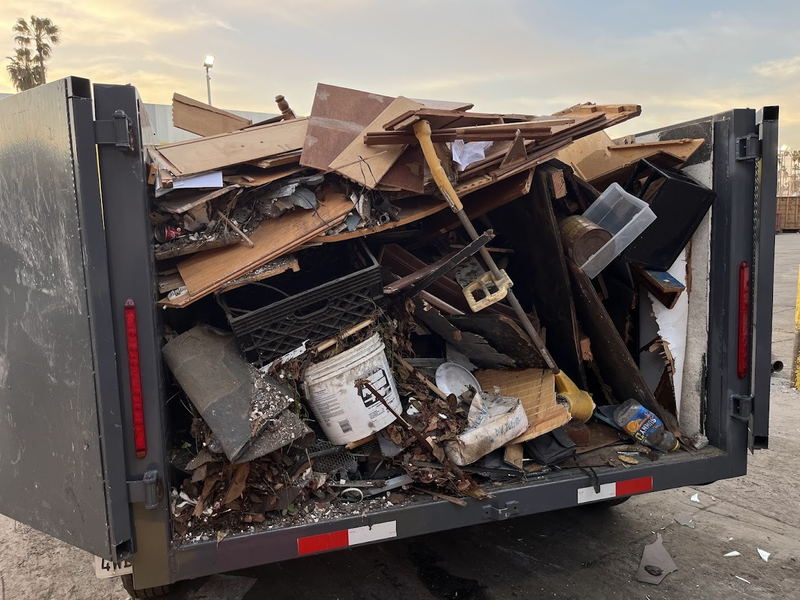
Our dump trailer loaded with mixed construction debris at dusk: cut timber, baseboard, a paint bucket, crates and broken fixtures stacked above the tailgate on a Los Angeles County job
A Los Angeles County debris load tarped and weighed in at a certified gate.
In short

Studio City sits inside the City of Los Angeles, where all mixed construction and demolition waste must be carried by a permitted private hauler to a City-certified processing facility. LA Sanitation assesses penalties of up to $5,000 for every load taken elsewhere, and building permit applications require the contractor to name that hauler.

The rule is short and it has money attached. On March 5, 2010 the Los Angeles City Council approved Council File 09-3029, establishing a citywide construction and demolition waste recycling ordinance. Under it, all mixed C&D debris generated inside the city must be transported by a permitted private waste hauler and processed at a City-certified facility, and every hauler or contractor handling that waste must hold a private Waste Hauler Permit from LA Sanitation before collecting or transporting it. LASAN assesses non-compliance penalties of up to $5,000 for every load not taken to a certified processor.

The part people miss is where the rule touches them. LASAN states that it works with the Los Angeles Department of Building and Safety to build this into the permit process, and that building permit applications require contractors either to identify their permitted private solid waste hauler or to produce their own permit for self-hauling. In other words the disposal decision is made at the counter, in writing, before a single wall comes down. Los Angeles Junk Removal & Hauling clears the debris, takes it to a certified gate and gives you the record of where it went.

Studio City remodels are mostly hillside remodels, and hillside remodels generate an awkward kind of waste: heavy, mixed and produced on a site that has nowhere to put it. Stucco and lath off an exterior. Tile and mortar out of a bathroom. Deck boards and joists. Cabinetry, old windows, framing offcuts, retaining wall spoil and the soil that came with it. It is dense rather than bulky, which means weight, not volume, sets what one truck can legally carry down the hill.

And unlike a garage clear-out, none of it is eligible for the free city route. LA Sanitation's bulky item program lists construction materials, concrete, brick and dirt among the things it cannot pick up at the curb, precisely because this material has its own ordinance. The county-wide service is on construction debris removal; what else we clear here is on junk removal in Studio City.

The rule, and the counter it runs through

A certified gate,
named on your permit application.

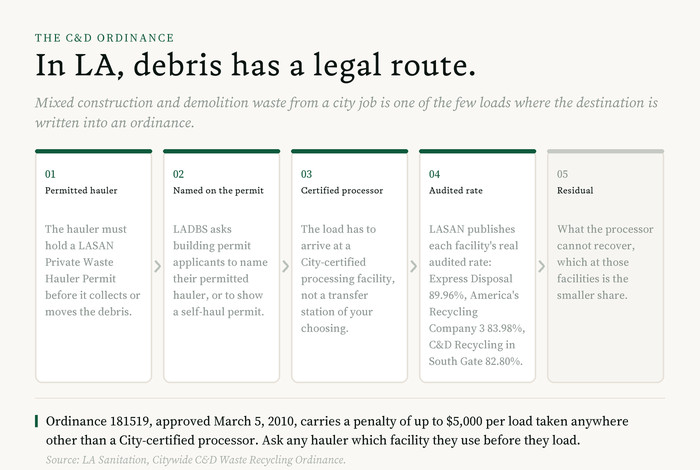
Take the compliance chain in order, because each link is a separate requirement. First, the hauler. Any private solid waste hauler operating inside the City of Los Angeles must hold an Assembly Bill 939 Compliance Permit, pay a compliance fee equal to 10% of gross receipts and file detailed quarterly tonnage and financial reports. That permit is what makes a truck legal to carry your debris at all. Second, the destination. Mixed C&D generated within the city must be hauled exclusively to City-certified processing facilities. Third, the penalty, which LASAN states as up to $5,000 for every load of C&D waste unlawfully processed, authorized under the citywide C&D ordinance, Ordinance 181519.

Fourth, and this is the link that reaches the homeowner rather than the contractor, the permit counter. LASAN describes partnering with LADBS to integrate this into the building permit process, with permit applications requiring the contractor to identify their permitted private hauler or to show a self-haul permit. If you are pulling a permit in Studio City, the disposal answer is part of the application, not something settled later when the first pile appears.

LASAN publishes the certified processor list annually, with each facility's audited mixed C&D recycling rate, and it is worth knowing that the rates are not all alike. For a Studio City job the practical cluster sits north and east of the hill: America's Recycling Company 3 on Glenoaks Boulevard in Sun Valley at 83.98%, American Reclamation on Doran Street at 80.75%, Cordova Construction Services on Montague Street in Pacoima at 76.20%, and Simi Valley Landfill and Recycling Center at 74.56%. LASAN also maintains an interactive map of certified processors, updated January 16, 2026, and takes questions on (213) 485-1374.

One honest caveat about what the ordinance is and is not. It is a destination rule, not a resident-facing percentage target: it tells you where the material has to go and who may carry it, and the diversion performance is measured at the processor. Concrete, asphalt, brick, dirt and mixed inerts, wood waste, gypsum and wallboard and scrap metal are all named by LASAN as C&D materials that can be recycled, which is a useful list to have in your head when you are deciding what to separate on site and what to let go out mixed.

$5,000the penalty LA Sanitation assesses per load of C&D waste not taken to a certified processor
March 5, 2010the date Los Angeles City Council approved the citywide C&D recycling ordinance
At the permit counterwhere LADBS asks a contractor to name the permitted hauler, per LASAN

Sources: LA Sanitation C&D Recycling Program and Waste Hauler Compliance Program. Cited in full below.

The ordinancecitywide Construction and Demolition Waste Recycling Ordinance, approved by City Council on March 5, 2010 under Council File 09-3029
Ordinance number181519, cited by LASAN as the authority for the penalty
What it requiresall mixed C&D debris generated in the city hauled by a permitted private waste hauler to a City-certified processing facility
Hauler permita private Waste Hauler Permit from LASAN, obtained before collecting, hauling or transporting C&D waste
State layeran AB 939 Compliance Permit, a compliance fee equal to 10% of gross receipts, and quarterly tonnage and financial reports
Penaltyup to $5,000 assessed for every load not taken to a certified processor
Where it meets youLASAN states building permit applications require the contractor to identify their permitted hauler or show a self-haul permit
Named C&D materialsconcrete, asphalt, brick, dirt and mixed inerts, wood waste, gypsum and wallboard, scrap metal
Certified processor listpublished for calendar year 2026 with each facility's audited mixed C&D recycling rate
Nearby certified ratesAmerica's Recycling Company 3, Sun Valley 83.98%; American Reclamation, Doran St 80.75%; Cordova, Pacoima 76.20%; Simi Valley 74.56%
Facility mapLASAN's interactive map of City-certified C&D processors, updated January 16, 2026
Program contactLASAN Solid Resources Citywide Recycling Division, (213) 485-1374

Sources: LA Sanitation, Construction and Demolition (C&D) Recycling Program · LA Sanitation, Waste Hauler Compliance Program · LA Sanitation, Schedule a Bulky Item Pickup, Single-Family Residents

The hillside haul-out

No room for a box,
so the debris leaves by the load.

On a flat lot the container solves the problem: a roll-off lands in the driveway, the crew fills it over a week and one truck takes it away. Most of Studio City's remodel work happens where that sequence does not exist. The streets climbing south of Ventura Boulevard are frequently one lane in practice, parked on one side, with no shoulder, no turnaround and a driveway too short or too steep to hold a box and still let a car out. Where a container cannot legally or physically stand, the debris has to move in loads instead, which changes how the job is planned rather than whether it can be done.

That has three consequences worth knowing before you book anything. The material comes up or down stairs to reach the vehicle, so it is bagged, bundled or barrowed rather than thrown. The vehicle is chosen for the street rather than the volume, and it makes more trips. And because this material is dense, weight fills a truck long before the sides do: a bathroom's worth of tile and mortar, or a section of stucco and lath, will reach a legal load limit with the bed half full. Anybody quoting a hillside demolition haul by volume alone has not done one.

Then there are the counters above the debris. Studio City sits in the Sherman Oaks-Studio City-Toluca Lake-Cahuenga Pass Community Plan area, and two Specific Plans overlay parts of it. Properties within the Mulholland Scenic Parkway Specific Plan area go through a Design Review Board that meets on the first and third Wednesdays of the month at 1:00 p.m. at 6262 Van Nuys Boulevard. Work in the Ventura-Cahuenga Boulevard Corridor Specific Plan area, updated by Ordinance 188816 effective March 14, 2026, has a Plan Review Board meeting the first Thursday of the month at the same address. Neither board has anything to do with waste. They matter here because they sit ahead of the building permit, and the building permit is where the hauler question is asked, so on a hillside job the disposal arrangement is settled weeks before the first load exists.

Last practical note: keep the streams apart at the source where you can. Clean concrete, clean wood, scrap metal and gypsum all have better destinations separated than mixed, and hillside soil is heavy enough to be worth its own conversation. If the job also produced leftover paint, thinners or solvents, those are household hazardous waste and belong at a S.A.F.E. Collection Center rather than in a debris load. If it produced brush as well, that is yard waste removal.

Sources for the planning detail above: Los Angeles City Planning, Sherman Oaks-Studio City-Toluca Lake-Cahuenga Pass Community Plan · Los Angeles City Planning, Mulholland Scenic Parkway Specific Plan · Los Angeles City Planning, Ventura-Cahuenga Boulevard Corridor Specific Plan

Tell us the scope, the street width and whether a container can legally stand there.

Free upfront quote, no obligation. One number, agreed before anything is lifted.

5.0 from 67 reviews on GoogleMon–Sat, open 24 hours

On the job
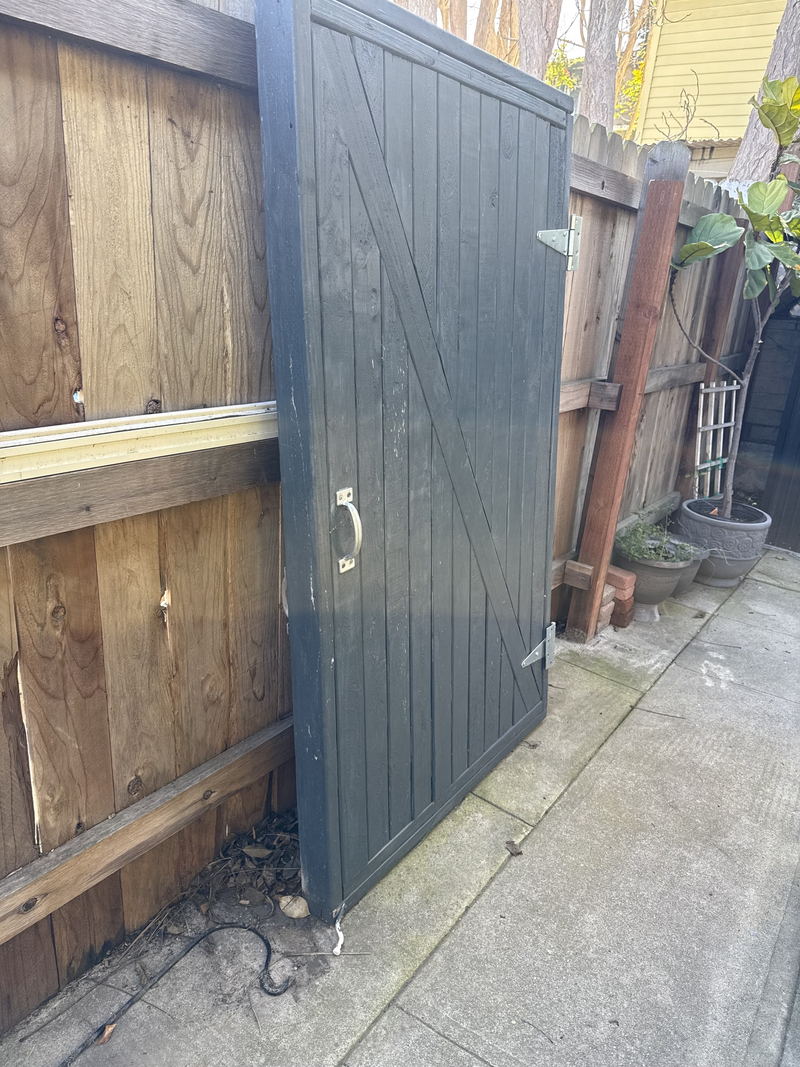
A heavy timber garden gate lifted off its hinges and leaned against a failing board fence along a narrow Los Angeles County side path, ready to be carried out
An old gate and fence panels pulled for removal · Studio City
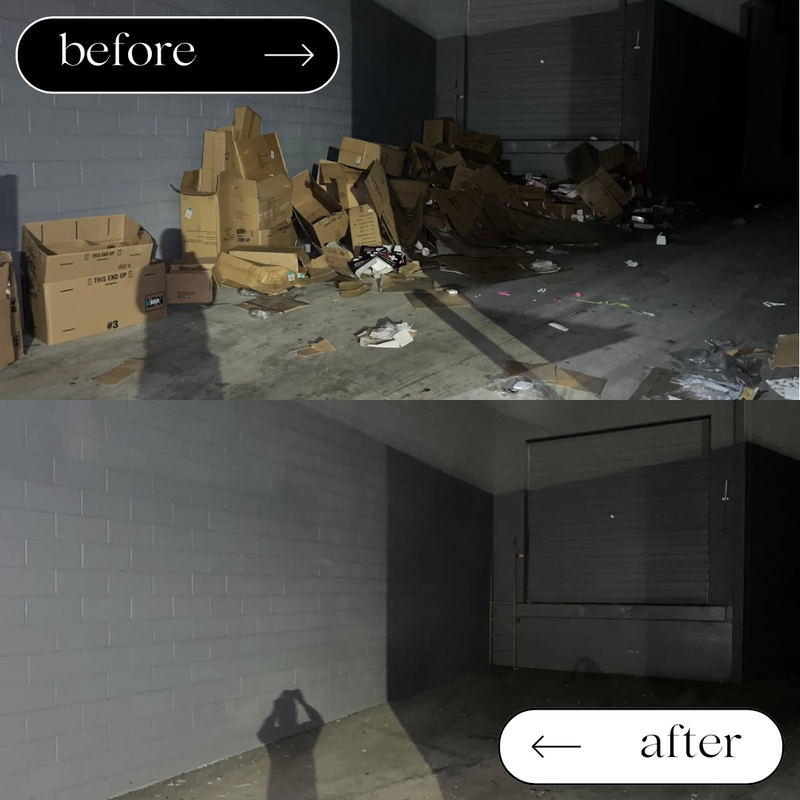
Before and after of a Los Angeles County commercial unit: the floor buried in collapsed cardboard cartons and loose litter, then the same unit completely empty with the roller door clear and the concrete swept
Before and after — a commercial unit cleared and swept · Studio City
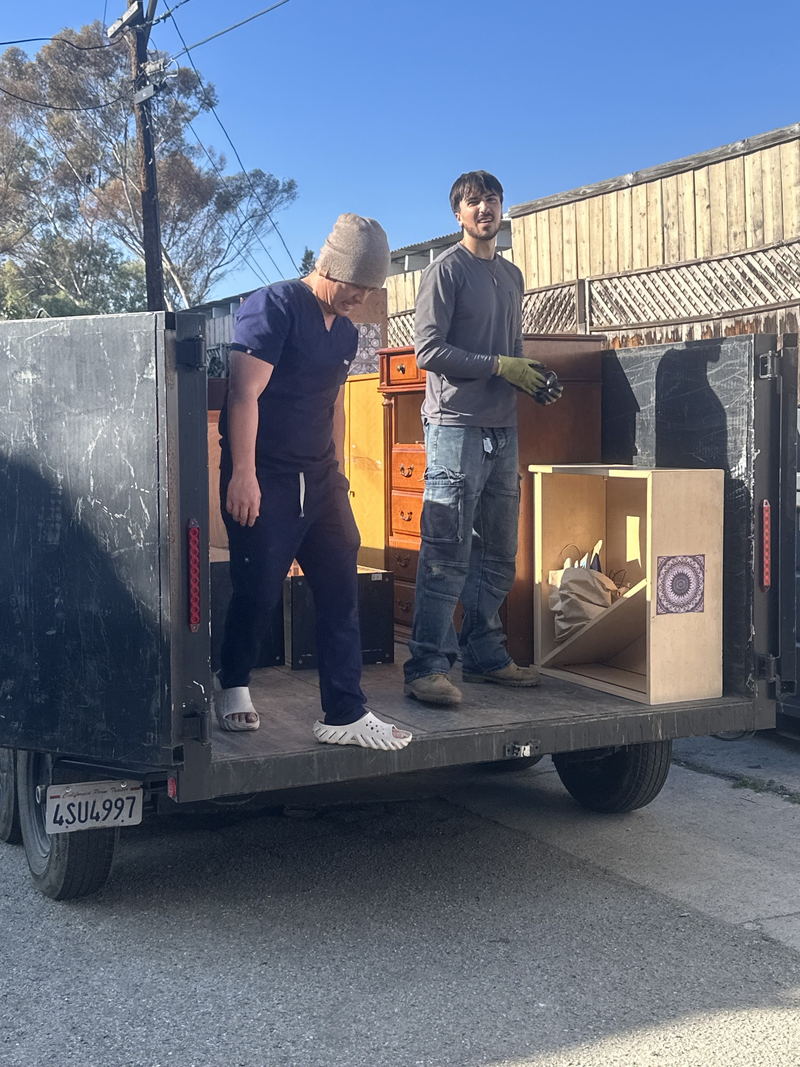
Two of our crew standing on the deck of the dump trailer on a Los Angeles County job, working a timber chest of drawers and a cabinet into place by hand
Our own crew, loading by hand · Studio City

Our own crews on Los Angeles County jobs. The construction debris removal we run in Studio City looks like this too: side yards, narrow walkways and the back of the property is where the work actually is.

Where the load lands

A weighed ticket
from a named facility.

A compliant Studio City debris load has a paper trail by design. It leaves on a hauler holding a LASAN private Waste Hauler Permit and an AB 939 Compliance Permit. It arrives at a facility on the City's certified processor list rather than at whichever gate is closest. It is weighed, and the processor reports its diversion to the City; LASAN publishes an audited mixed C&D recycling rate for each certified facility and provides forms for processors to report both to the City and back to the permitted hauler. If you need documentation for a permit file, a lender, a client or a green building submittal, ask for it at the time of the job and it exists.

Inside the facility the load is broken back into commodities. LASAN names concrete, asphalt, brick, dirt and mixed inerts, wood waste, gypsum and wallboard, and scrap metal as recyclable C&D streams. Inert material is crushed for aggregate and base. Wood is chipped. Metal goes to scrap. Gypsum has its own handling. The reason the ordinance points at certified facilities rather than simply at recycling targets is that this separation only happens where there is a sorting line to do it.

Three things do not belong in the load, and putting them there is how a compliant job stops being one. Paint, solvents, adhesives and pool chemicals are household hazardous waste and go to a S.A.F.E. Collection Center. Electrical items pulled out during a remodel are universal waste in California. And material suspected of containing asbestos or lead is a specialist stream with its own rules; it is not something a junk removal truck should be guessing about, and the honest answer on a pre-1980 Studio City hillside house is to have it tested before demolition rather than after.

Sources: LA Sanitation, Construction and Demolition (C&D) Recycling Program · LA Sanitation, Waste Hauler Compliance Program · LA Sanitation, S.A.F.E. Collection Centers and Household Hazardous Waste

The rule behind it
Diagram of the Los Angeles construction and demolition ordinance route: a LASAN-permitted hauler named on the building permit takes mixed debris to a City-certified processor with a published audited recycling rate
The route the C&D ordinance actually requires

Same rule in Studio City as anywhere else in Los Angeles County. The local part is the program above, not the disposal law. Full detail on construction debris removal.

Worth knowing

Studio City debris
in six lines.

Construction debris facts
  1. All mixed construction and demolition debris generated in the City of Los Angeles must be hauled by a permitted private waste hauler to a City-certified processing facility.
  2. LA Sanitation assesses non-compliance penalties of up to $5,000 for every load of C&D waste not taken to a certified processor.
  3. The citywide C&D recycling ordinance was approved by Los Angeles City Council on March 5, 2010 under Council File 09-3029, and is cited by LASAN as Ordinance 181519.
  4. LASAN states that building permit applications require a contractor to identify their permitted private hauler or provide their own self-haul permit.
  5. Private haulers in the city must hold an AB 939 Compliance Permit, pay a fee equal to 10% of gross receipts and file quarterly tonnage and financial reports.
  6. LA Sanitation's bulky item collection cannot take construction materials, concrete, brick or dirt from a Studio City curb.

This page is construction debris removal in Studio City specifically. The wider service is on construction debris removal across Los Angeles, and everything we haul in this city is on junk removal in Studio City. Same crew, different job: Furniture removal in Studio City, Mattress removal in Studio City. Pricing works the same way everywhere: how our pricing works, and the full map is on areas we serve.

Service area
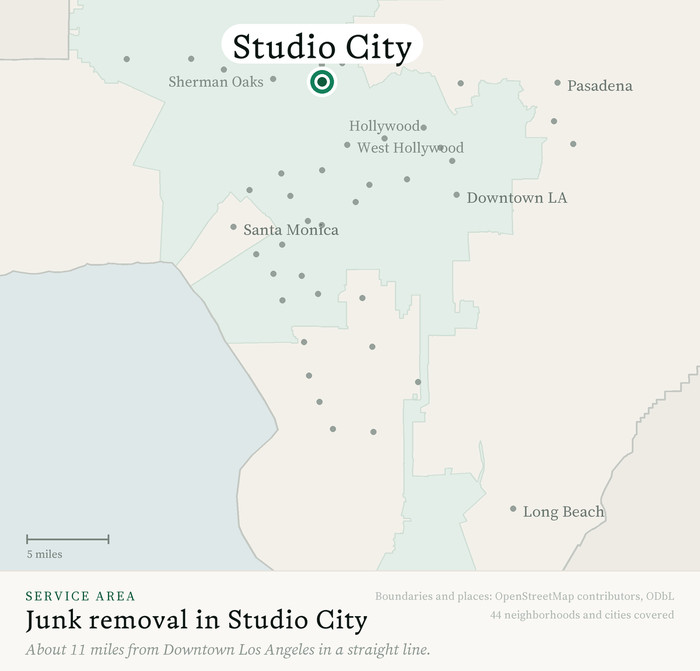
Map of our greater Los Angeles junk removal service area with Studio City marked, about 11 miles from Downtown Los Angeles, drawn from OpenStreetMap boundary data
Studio City in the greater Los Angeles service area. Boundaries and places from OpenStreetMap contributors, ODbL.

We are already next door most days. The whole list is on areas we serve.

Other things we clear in Studio City

Debris, brush, garages and whole-property clearances, all quoted flat.

Studio City debris
questions

The ordinance, the permit counter, the hillside haul and the paperwork.

Can I put remodel debris out for the city bulky pickup?

No. LA Sanitation's bulky item collection specifically cannot take construction materials such as concrete, bricks and dirt at the curb. That is not an oversight; mixed construction and demolition waste generated inside the City of Los Angeles falls under a separate ordinance requiring it to be hauled by a permitted private waste hauler to a City-certified processing facility, with penalties of up to $5,000 per load taken elsewhere.

Does this apply to a small bathroom remodel, or only to big projects?

The requirement LASAN publishes is about the material and where it goes: all mixed C&D debris generated in the city must be transported by a permitted private hauler to a City-certified facility. Scale does not change the destination. What scale changes is how visible the job is, and if you are pulling a building permit at all then LASAN says the application asks the contractor to identify their permitted hauler or show a self-haul permit.

There is nowhere on my street to put a container. What then?

That is the normal situation on the streets climbing south of Ventura Boulevard, and the answer is to move the debris by the load instead of by the box. We size the vehicle to the street, stage where we are not blocking a through route, and shuttle. Because demolition material is dense, a legal load limit is usually reached well before the truck looks full, so more trips is the honest plan rather than a surprise.

Can you give me proof of where the debris went?

Yes, ask at the time of booking. A compliant load goes out on a permitted hauler and into a facility on the City's certified processor list, where it is weighed and the processor reports its diversion to the City. LASAN publishes an audited mixed C&D recycling rate for every certified facility and provides reporting forms both to the City and back to the permitted hauler, so the documentation exists if you need it for a permit file or a client.

Which certified processors are closest to Studio City?

The practical cluster is north and east of the hill. On LASAN's calendar year 2026 certified list, America's Recycling Company 3 on Glenoaks Boulevard in Sun Valley is audited at 83.98%, American Reclamation on Doran Street at 80.75%, Cordova Construction Services on Montague Street in Pacoima at 76.20% and Simi Valley Landfill and Recycling Center at 74.56%. LASAN also publishes an interactive map of certified processors, updated January 16, 2026.

What about leftover paint, solvents and anything that might contain asbestos?

None of those ride in a debris load. Paint, thinners, adhesives and pool chemicals are household hazardous waste and go to a S.A.F.E. Collection Center, which LA Sanitation runs for exactly this material. Anything suspected of containing asbestos or lead is a specialist abatement stream with its own rules, and on an older hillside house the right order is to test before demolition rather than discover it in a pile afterward.

The proof

What our customers say

5.0from 67 reviews on Google

Word for word from Google. Nothing tidied.

  • 3 months ago

    Hunter is truly dedicated on providing the most excellent of removal of unwanted junk from your home or office. Always on time, very efficient at his job in a timely manner. I would recommend him for any junk removal you may have.

    James Russell3 reviewsHome and office junk removal
  • Fair pricing 11
  • Personable staff 10
  • Polite 5
  • Punctual staff 4
One city over

Construction debris removal near Studio City

Collection rules, transfer stations and permit counters change at the city line, so each of these is written for that city rather than for Studio City. A job that straddles two of them is still one visit and one number.

Everything we haul in the cities next door: Valley Village, Sherman Oaks, Van Nuys. The whole list is on areas we serve.

Request a quote

Send a photo, get a flat number back. Free, no obligation, no pressure and no call-out fee — and if your city will haul it free instead, we will tell you that too. Most requests are answered within the hour during working hours.

Or call or text (323) 230-0777 — Mon–Sat around the clock, Sunday 1–10pm.

Call (323) 230-0777Text a photo